


What Is the Meaning of Yap in Online Conversations?
Scroll through TikTok or X for more than five minutes, and you’ll likely spot someone calling another person a “yapper” or telling them to “stop yapping.” This slang term has exploded across social media, but its meaning goes back further than most people realize.
This guide covers everything about yap meaning from its dictionary origins to how Gen Z uses it today in chats, gaming, and social media.
Yap Meaning Overview
At its core, “Meaning of Yap” means to talk excessively, often about trivial or meaningless things. The term traditionally described the sharp, repetitive bark of a small dog, and over time it was applied to humans who talk nonstop in a similar chattering way.
Here’s a quick snapshot of how the word functions today:
| Term | Meaning |
|---|---|
| Yap | To talk a lot, often without much substance |
| Yapping | The act of talking excessively |
| Yapper | A person who talks too much |
| I’m yapping | Self-aware admission of rambling or oversharing |
The word isn’t new — but its modern, internet-driven usage has given it a fresh cultural spin, especially among younger generations online.
What Does Yap Mean in Text?
In texts and DMs, “yap” is used casually to describe rambling or oversharing. Someone might text a long paragraph and follow it with “sorry, I’m yapping” to acknowledge they got carried away.
It can also be used to call out someone else’s message:
- “Bro really yapped for 10 paragraphs 💀”
- “Ok that’s enough yapping, what’s the actual plan?”
What Does “Yapping” Mean?
“Yapping” refers to talking a lot, usually about something unimportant or without a clear point. It’s the verb form of “Meaning of Yap” and is the most commonly used version of the slang online.
Unlike more serious insults, yapping is typically lighthearted. It’s less about being cruel and more about playfully calling out a chatterbox whether that’s a friend, a streamer, or even a random commenter online.
What Does “I’m Yapping” Mean?
When someone says “I’m yapping,” they’re self-aware admitting that they’re talking too much or going off-topic. It’s often used humorously, almost like a disclaimer before or after a long message or voice note.
Example: “Wait, I’m yapping, let me get to the point.”
This self-referential use has become especially popular in captions and comment sections, where people acknowledge their own rambling before someone else can call it out.
Where Did Yap Come From?
The word “Meaning of Yap” has been around for centuries. According to dictionary records, it dates back to the early 1600s, originally describing the quick, sharp bark of a small dog. By the late 1800s, it had extended to describe humans who talked in a similarly noisy, chattering way.
The word also has documented ties to AAVE (African American Vernacular English) and appeared in rap lyrics from artists like Master P, Nas, and JAY-Z decades before its recent social media resurgence.
Its viral comeback happened in 2023, when TikTok creators began using “Meaning of Yap,” “yapping,” and “yapper” in memes and prank videos, poking fun at people including streamers who talked at length. From there, it quickly became a staple of Gen Z internet slang.
Yap Meaning in WhatsApp Chat
In WhatsApp and other messaging apps, yap is used the same casual way as in texting usually to describe long voice notes, lengthy paragraph messages, or friends who send an overwhelming number of texts in a row.
A common example: “She sent me 15 voice notes, she really was yapping.”
Yap Meaning on TikTok

TikTok is largely responsible for making “Meaning of Yap” mainstream again. On the platform, it’s used to:
- Mock reaction video creators who talk over clips excessively
- Describe streamers who ramble during live sessions
- Caption videos of people (or even dogs) talking nonstop, such as “what is bro yapping about”
The term became especially popular after viral prank videos showed people humorously telling others to “stop yapping” mid-conversation.
Yap Meaning on Social Media
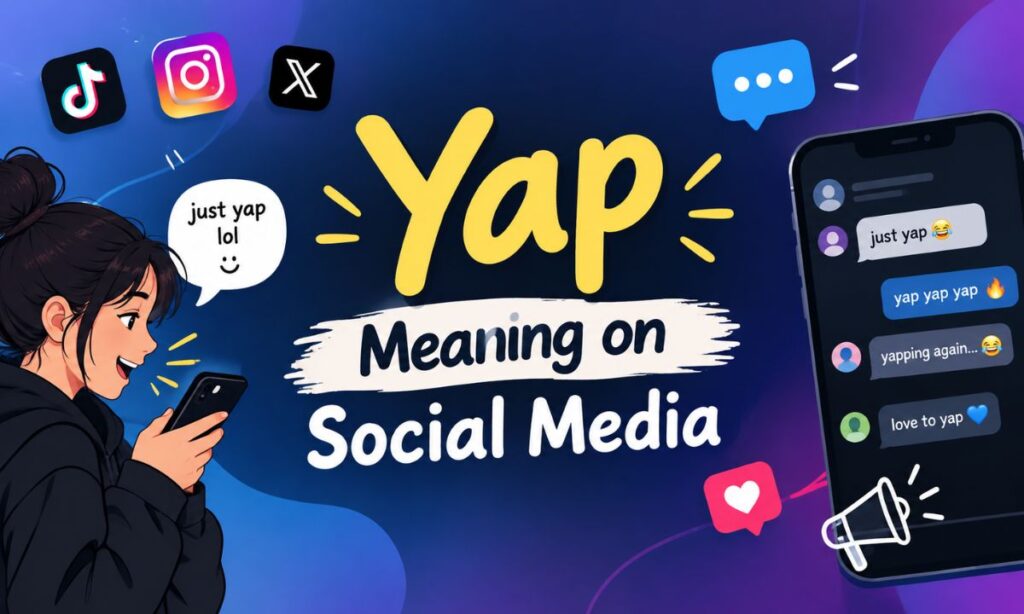
Across platforms like X, Instagram, and Reddit, yapping is used broadly to describe:
- Long, rambling social media threads
- Comment sections filled with unnecessary back-and-forth
- Influencers who talk at length without getting to the point
It’s become such a common label that some creators have leaned into it, jokingly branding themselves as “professional yappers” in their bios.
Yap Meaning in Gaming

In gaming communities, particularly on platforms like Discord and Twitch, “yapping” is often used to describe:
- Players who talk over teammates during matches
- Streamers who talk continuously instead of focusing on gameplay
- Voice chat participants who dominate the conversation
A teammate might type “yap less, play more” during a competitive match as a lighthearted jab.
What Does “Yapper” Mean?
A “yapper” is simply someone who yaps a lot a person known for talking excessively. It can be used as a light insult or, among friends, as an affectionate label for someone who’s naturally chatty.
- “He’s such a yapper, never stops talking.”
- “Certified yapper right here 🙋♀️”
Common Examples of Yap
Here are a few everyday examples showing how the term is used in context:
- Text message: “Ok I’m yapping, but basically the date went really well.”
- TikTok caption: “POV: your friend won’t stop yapping about her ex.”
- Gaming chat: “Bro was yapping the entire match instead of calling out enemies.”
- Social media bio: “Professional yapper. Ask me anything.”
- Group chat: “Sorry for the yap session, I had a lot to say today.”
Read Our Blog on meanvix
Yap vs Talk

| Feature | Yap | Talk |
|---|---|---|
| Tone | Casual, often teasing | Neutral |
| Implication | Excessive, sometimes pointless | Simply communicating |
| Usage | Internet slang, informal | Universal, formal or informal |
“Talk” is neutral and doesn’t imply anything negative. “Meaning of Yap,” on the other hand, suggests the talking has gone on too long or lacks real substance.
Yap vs Ramble
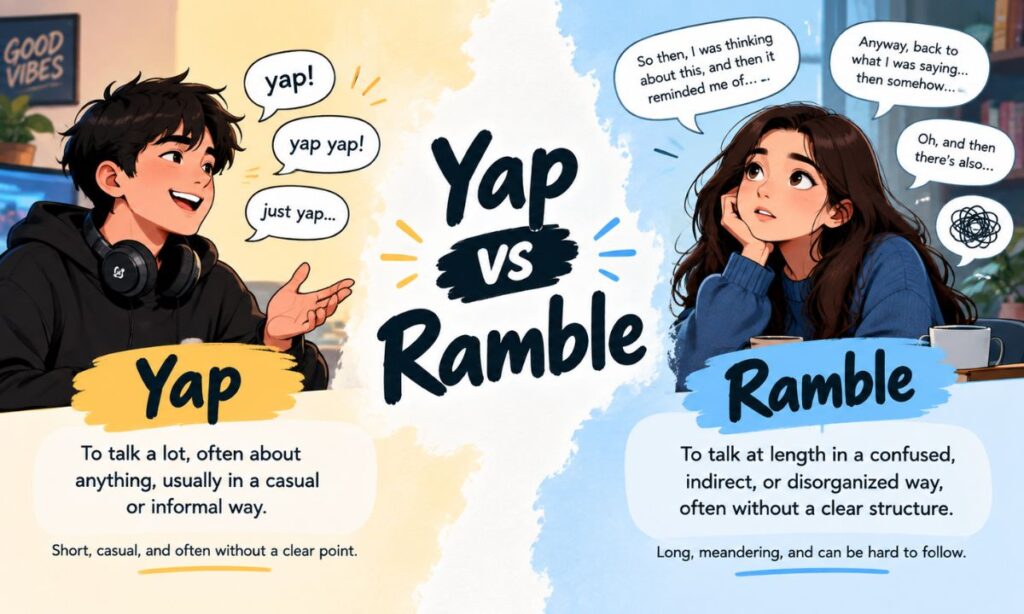
Yap and ramble are close in meaning, but there’s a subtle difference. Ramble usually implies losing track of the topic or wandering between ideas. Meaning of Yap focuses more on the sheer volume of talking, regardless of whether the speaker stays on topic.
Someone can yap about one single topic for a long time without technically rambling.
Yap vs Rant

A rant usually carries emotional weight frustration, anger, or passion about a specific issue. Yapping, by contrast, is often about trivial, low-stakes topics and doesn’t necessarily involve strong emotion. Ranting has a purpose behind the venting; yapping is often just talking for the sake of talking.
Is Yap a Bad Word?
No, Meaning of Yapap” is not a curse word or offensive slur, and it won’t get flagged or censored on any platform. However, it does carry a mildly negative or teasing connotation, since it implies someone is talking too much or without much substance.
That said, context matters. Among friends, being called a “Meaning of Yap” is often playful rather than genuinely insulting.
Conclusion
The word “Meaning of Yap” has come a long way from its original meaning as a term for a dog’s bark. Thanks to TikTok and Gen Z internet culture, it’s now a go-to slang term for excessive, low-substance talking whether that’s in text messages, gaming chats, or social media comments.
Whether you’re calling out a friend’s long voice notes or admitting you’re the one “Meaning of Yap” in a group chat, understanding this slang helps you keep up with how online conversations really work today.
FAQs
What does “Meaning of Yap” mean in slang?
It means to talk excessively, often about unimportant or trivial things.
Is “yapping” an insult?
It’s usually lighthearted, though it can carry a mildly negative tone depending on context.
Where did “Meaning of Yap” originate?
It originated in the early 1600s describing a dog’s bark, later extended to describe excessive human talking.
What does “I’m yapping” mean?
It’s a self-aware way of admitting you’re rambling or talking too much.
Is “yap” appropriate to use casually?
Yes, it’s common, non-offensive slang widely used in texts, social media, and casual conversation.
