

Introduction
You’re scrolling through your feed and see: “I’m finna eat.” It’s short, casual, and everywhere. But if you didn’t grow up hearing it, the word can feel like a puzzle.
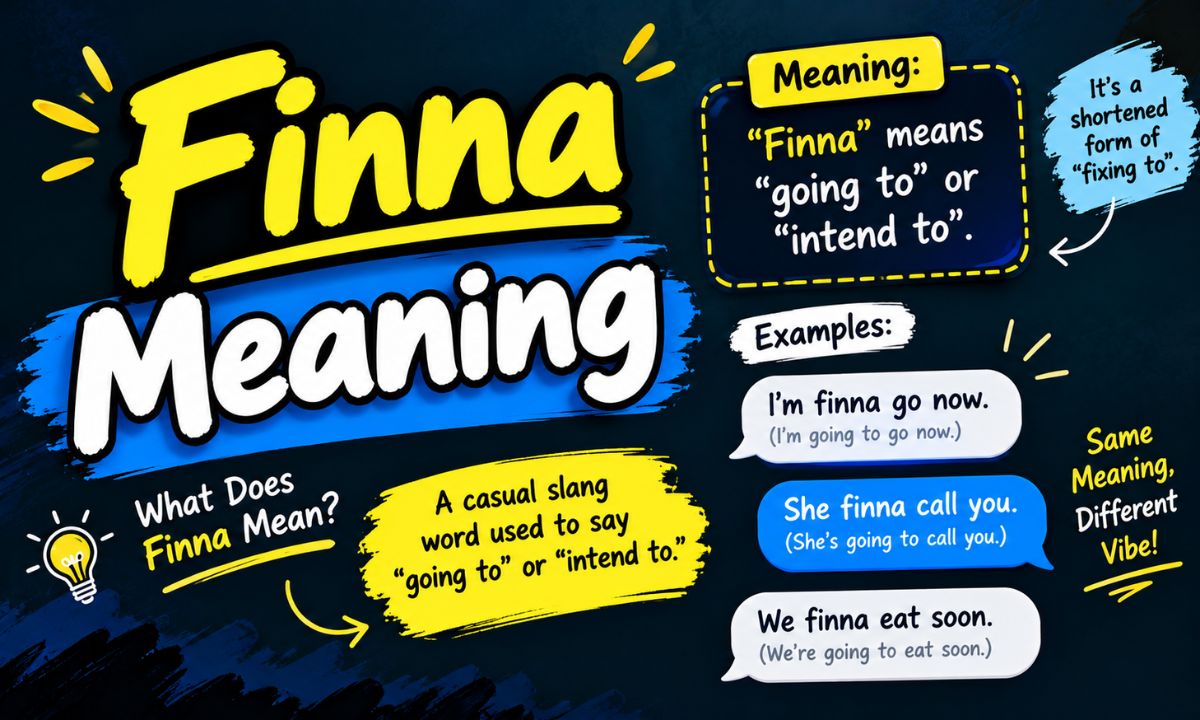
“Finna” is a slang contraction that means “fixing to” or “about to.” It’s used all over text messages, TikTok captions, gaming chats, and everyday speech.
This guide covers what “finna” means, how to say it, where it comes from, how it compares to “gonna,” and when to skip it.
What Does “Finna Meaning“ in Slang?
“Finna Meaning“ “about to” or “getting ready to.” It signals that something is going to happen very soon.
Quick examples:
- “I’m finna leave.” (I’m about to leave.)
- “She finna call you.” (She’s about to call you.)
- “We finna eat.” (We’re about to eat.)
Three things to know:
- It’s informal, so it belongs in casual chat, not formal writing.
- It usually suggests the action is close, not far in the future.
- It sits right before a verb: finna + verb.
Finna Meaning on Urban Dictionary
Crowd-sourced slang sites like Urban Dictionary define “finna” in much the same way: a shortened form of “fixing to,” meaning about to do something. Because these sites are edited by users, treat them as a snapshot of how people talk, not as a formal authority.
Is “Finna Meaning” in the Oxford Dictionary?
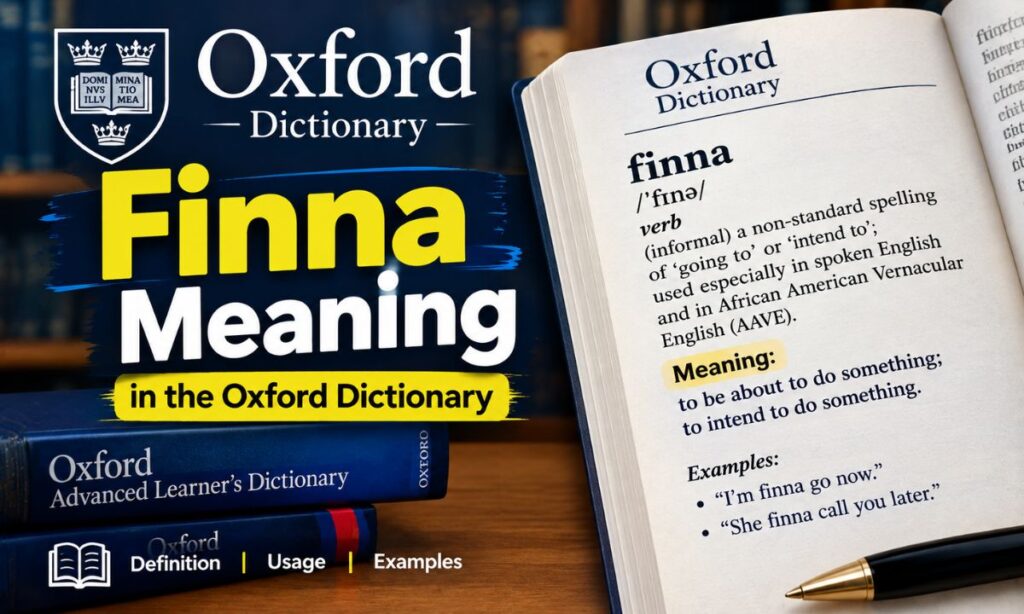
This is a common question, and the honest answer is that dictionaries are catching up with it. Merriam-Webster’s word-game tool lists “finna” as a playable word and links it to a Merriam-Webster definition. I could not confirm an Oxford entry, so check Oxford’s online dictionary directly if you need that specific citation.
In practice, a word doesn’t need a dictionary entry to be real. It’s real once people use and understand it, and “finna” clearly passes that test.
How to Pronounce “Finna Meaning”
“Finna” is usually pronounced “FIN-uh.”
- The first syllable rhymes with “pin.”
- The second syllable is soft and quick, like the end of “sofa.”
- The stress falls on the first syllable.
Accents vary, and some speakers stretch the first vowel slightly. That’s normal. If you want to sound natural, say it quickly and lightly, without pronouncing a hard “ah” at the end.
Where Did “Finna” Come From?
“Finna” grew out of the phrase “fixing to,” a long-standing expression in Southern American English meaning “getting ready to” or “about to.”
It’s most closely tied to African American Vernacular English (AAVE), where the phrase was shortened step by step. Linguists often discuss this as a natural process of speech reduction, the same way “going to” became “gonna.”
The History of “Finna”
The word’s path is easy to follow:
- “Fixing to”: a regional phrase meaning about to act.
- “Fixin’ to”: the casual spoken version with the “g” dropped.
- “Finna” (sometimes “fitna”): the fully shortened form used in speech.
- Online spread: hip-hop, social media, and gaming chats carried it to a global audience.
Language scholars note that this type of reduction is common. What makes “finna” interesting is how a regional spoken form moved into mainstream internet slang while keeping its roots in Black and Southern speech communities.
Why Is “Finna” So Popular Online?
Several reasons explain why it spread so quickly:
- It’s short. One word replaces “fixing to” or “about to.”
- It sounds natural. It matches how people speak, which suits texting.
- It’s expressive. It carries energy and a sense of immediacy.
- Platforms amplify it. TikTok, Instagram, X, and Discord reward casual, punchy language.
- Music and memes spread it. Songs, clips, and captions put it in front of millions.
Examples of “Finna” in Everyday Conversations
Everyday Examples
- “I’m finna head home.”
- “We finna order pizza, you want some?”
- “He finna start his shift.”
Funny Examples
- “Me finna open the fridge for the fifth time in ten minutes.”
- “My phone is finna die and I’m finna panic.”
- “I’m finna take a ‘quick’ nap. See you in four hours.”
Relationship Examples
- “I’m finna call you, pick up.”
- “She finna text me back, I can feel it.”
- “We finna have a serious talk tonight.”
Gaming Examples
- “I’m finna drop in, cover me.”
- “He finna rage quit if we win this round.”
- “We finna clutch this match.”
School Examples
- “I’m finna submit my assignment before the deadline.”
- “The teacher finna hand back our tests.”
- “We finna have a pop quiz, I just know it.”
Read our Blog on Meanvix
Difference Between “Finna Meaning” and “Gonna”
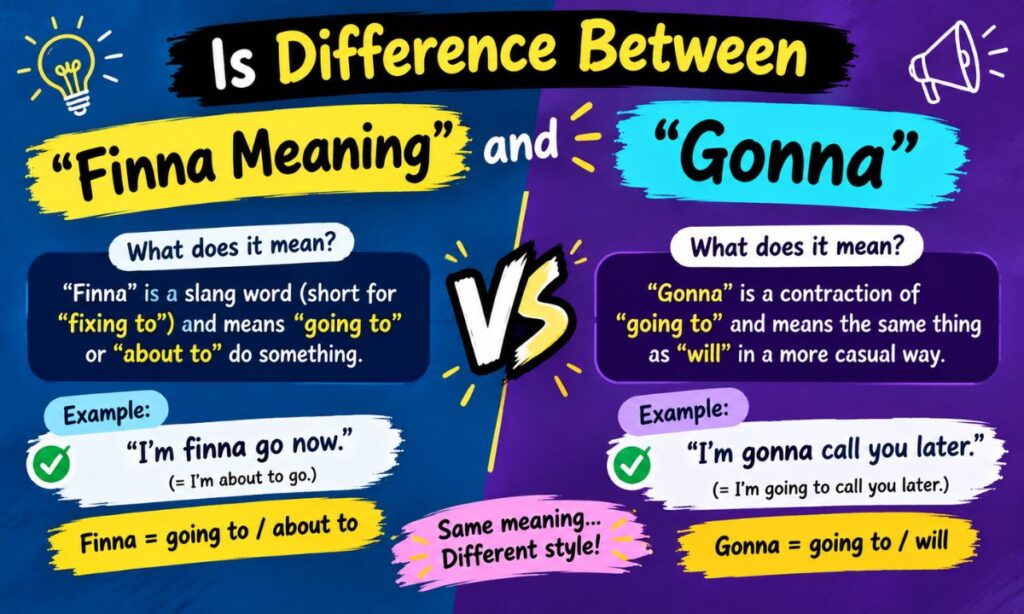
Both point to the future, but they feel different.
| Feature | Finna | Gonna |
| Full form | Fixing to | Going to |
| Time frame | Very soon, almost immediate | Anytime in the future |
| Tone | Casual, expressive | Casual, neutral |
| Origin | AAVE / Southern American English | General spoken English |
| Example | “I’m finna leave.” | “I’m gonna leave tomorrow.” |
Simple rule: Use “finna” when the action is moments away. Use “gonna” when it could be later today, next week, or next year.
“I’m Finna Meaning study” suggests you’re opening your books right now. “I’m gonna study” could mean tonight or tomorrow.
Why Slang Like “Finna” Changes English
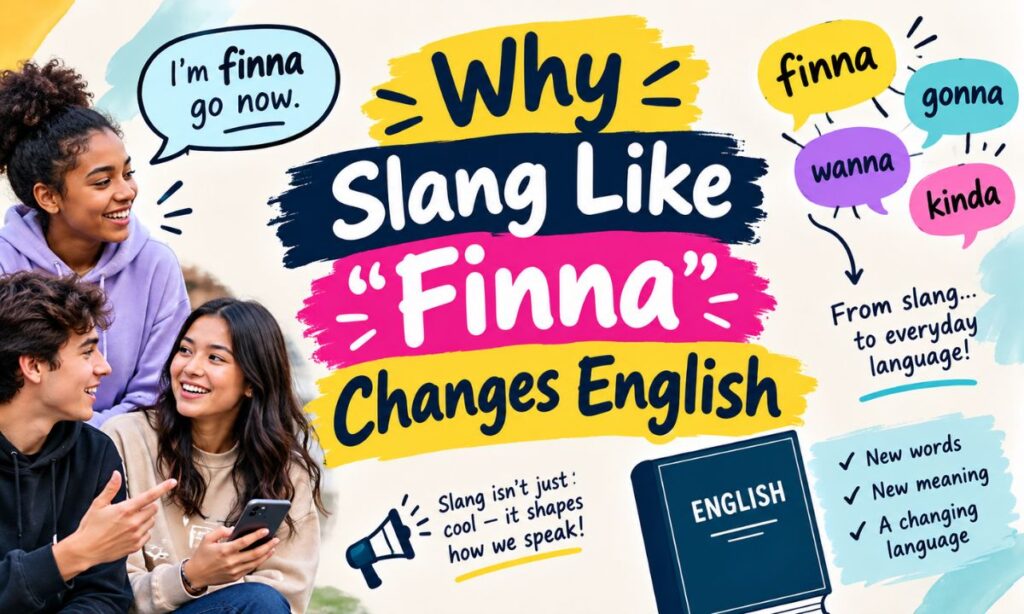
Slang is how a language stays alive. New words appear, spread, and sometimes become standard.
Here is how slang like “Finna Meaning” shapes English:
- It shortens long phrases. People naturally compress speech over time.
- It reflects culture. Words show who is talking and where they come from.
- It tests the dictionary. Reference books must decide when a word has earned a place.
- It creates identity. Using certain words signals belonging to a community or generation.
“Gonna,” “wanna,” and “gotta” all started the same way, as casual speech that eventually became widely accepted. “Finna” is following a similar path.
“Finna” on TikTok and Social Media
On social platforms, “finna” shows up constantly in:
- Captions: “Finna Meaning try this recipe, wish me luck.”
- Comments: “Finna save this for later.”
- Video hooks: “POV: you finna get ready for the weekend.”
- Stories and posts: quick updates about what someone is about to do.
Its short, punchy sound matches the fast style of short-form video, which helps it travel.
Funny Meme Captions Using “Finna Meaning”
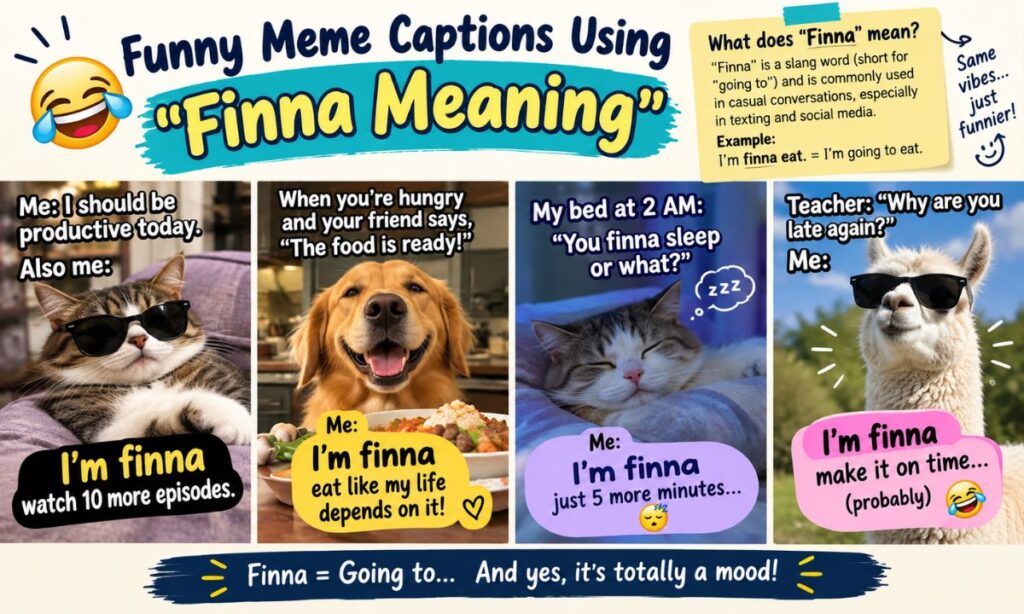
Here are some original captions you can borrow:
- “Me finna ‘organize my life’ by opening 14 new tabs.”
- “Alarm goes off: finna get up. Brain: finna not.”
- “Finna eat healthy starting tomorrow (said every day).”
- “My wallet finna cry when this delivery arrives.”
- “Finna act like I understood the group project instructions.”
Can Older People Use “Finna Meaning”?
Anyone can use it, but context matters.
- Southern speakers may already say “fixing to” naturally.
- Parents and older adults may use it jokingly with younger family members.
- Learners of English can use it in casual chat once they understand the tone.
A few pointers:
- Use it naturally, not forced. Overdoing slang can sound like you’re trying too hard.
- Remember its roots. It comes from Black and Southern speech communities, so it’s good to use it respectfully and avoid mocking the dialect.
- If it doesn’t feel natural, “about to” works just as well.
When NOT to Use “Finna Meaning”
“Finna” is informal. Skip it in these situations:
- Job applications, cover letters, and resumes.
- Emails to managers, clients, or professors.
- Academic essays and official reports.
- Formal speeches and presentations.
- Messages to people unfamiliar with slang. They may not understand it.
- Serious or sensitive conversations. Casual slang can sound careless.
In those cases, use “about to,” “going to,” or “preparing to.”
Common Slang Words Similar to “Finna Meaning”
| Slang | Meaning | Example |
| Fixing to | About to (original form) | “I’m fixing to leave.” |
| Gonna | Going to | “I’m gonna call you later.” |
| Bout to | About to | “I’m bout to head out.” |
| Tryna | Trying to | “I’m tryna get some sleep.” |
| Gotta | Got to / have to | “I gotta go.” |
| Wanna | Want to | “I wanna see that movie.” |
| Lemme | Let me | “Lemme check real quick.” |
| Imma | I’m going to | “Imma text you later.” |
Conclusion
“Finna” means “about to” or “fixing to,” and it points to something happening very soon. It comes from Southern American English and AAVE, and it has grown into a staple of modern texting and social media.
Use it in casual conversations, captions, and chats with people who know the slang. Save it for informal moments, and switch to standard phrases in formal settings. Understanding words like “finna” also helps you see how living English keeps evolving.
FAQs
What does “Finna Meaning”?
“Finna” means “about to” or “fixing to,” showing that an action is happening very soon.
Is “finna” a real word?
Yes. It’s informal slang with a clear meaning, and some dictionary resources now recognize it.
How do you pronounce “finna”?
It’s pronounced “FIN-uh,” with the stress on the first syllable.
Where does “finna” come from?
It comes from “fixing to,” a Southern American English phrase, and is closely tied to African American Vernacular English.
What is the difference between “finna” and “gonna”?
“Finna Meaning” suggests something is about to happen right away, while “gonna” can refer to any time in the future.
Is “finna” in the Oxford dictionary?
I couldn’t confirm an Oxford entry, though Merriam-Webster’s word tools list it. Check Oxford’s website for its current status.
Can I use “Finna Meaning” in formal writing?
No. It’s informal, so use “about to” or “going to” in professional or academic writing.
Is “finna” the same as “fixing to”?
Yes. “Finna” is the shortened spoken form of “fixing to.”
