

“Understanding Skint” If you’ve ever heard someone from the UK say, “I’m completely skint this week,” you might have wondered what on earth that means. It’s not a typo, and it’s definitely not a compliment about skin. “Skint” is one of the most common words in British slang for being out of money — and it’s been around for nearly a century.
This guide covers everything about the word: its meaning, origin, everyday usage, and how it compares to similar words like “broke” and “poor.”
Skint Meaning Overview
“Skint” is a British slang term that means having no money, or very little money. It’s informal, widely understood across the UK, and commonly used in everyday conversation rather than formal writing.
- Part of speech: Adjective
- Region: Primarily British, also used in Australia, New Zealand, Ireland, and South Africa
- Tone: Casual, informal, non-offensive
What Does Skint Mean in Slang?
In slang usage, “skint” simply describes someone who is temporarily short on cash. It doesn’t necessarily mean someone is living in long-term poverty — it’s often used to describe a short-term situation, like being low on funds right before payday or after an unexpected expense.
Example: “I can’t go out this weekend, I’m skint until Friday.”
Skint Meaning in Text Messages
In texts and casual online chats, “skint” is used exactly the way it’s spoken — as a quick, informal way to say you don’t have money for something.
Example:
- Friend: “Want to grab dinner tonight?”
- You: “Can’t, I’m skint till payday 😅”
It’s a common, friendly way to decline plans or explain a tight budget without going into detail.
Skint Knee Meaning
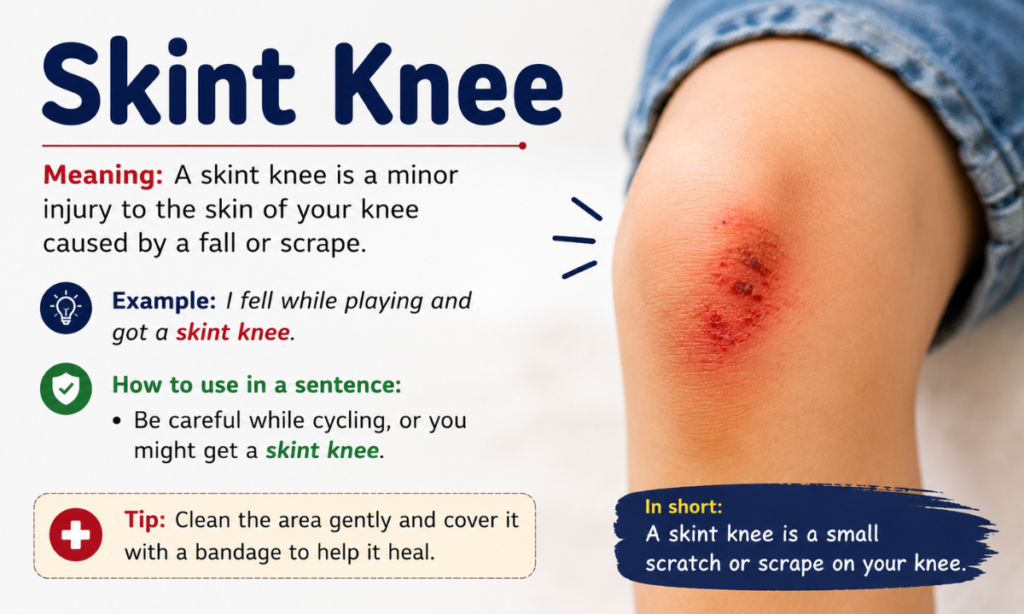
It’s worth clearing up a common mix-up: “skint” (no money) is completely different from a “skinned knee,” which refers to a minor injury where the skin is scraped off, usually from a fall. The two words look similar but have no real connection in modern usage.
Skint in a Sentence
Here are a few natural examples of “skint” used in everyday conversation:
- “I’m skint after paying rent this month.”
- “We were completely skint by the end of the holiday.”
- “He’s always skint the week before payday.”
- “I’d love to help, but I’m a bit skint right now.”
Skint Broke Meaning
“Skint” and “broke” mean essentially the same thing — having no money — but “skint” is the British version of the word, while “broke” is used more universally, including in American English.
Skint Meaning in British Slang
“Skint” is deeply embedded in British slang and working-class vocabulary, especially in cities across England, Scotland, Wales, and Northern Ireland. It’s used casually across all age groups and is one of the most recognizable British money-related slang terms, alongside phrases like “quid” (pound) and “boracic” (a rhyming-slang variation of “skint”).
What Does “Absolutely Skint” Mean?
Adding “absolutely” in front of “skint” simply emphasizes just how broke someone is. “Absolutely skint” means having no money whatsoever — not even enough for small, everyday expenses.
Example: “I can’t even afford a coffee, I’m absolutely skint.”
Skint Meaning on Social Media
On social media, “skint” is often used humorously or self-deprecatingly, especially in captions or comments about spending too much money on nights out, holidays, or shopping.
Example caption: “Officially skint after that shopping spree 😂💸”
It’s also frequently used in UK-based finance and budgeting content, where creators talk about “surviving on a skint budget” or “skint-friendly meals.”
Where Did the Word Skint Come From?
The origin of “skint” traces back to the early 20th century. Linguists believe it developed as a dialect pronunciation of the word “skinned,” which was historically used to describe someone who had lost all their money — often through gambling, as if they’d been “skinned” of their cash.
Over time, “skint” became the more common spelling and pronunciation, eventually overtaking “skinned” as the standard slang term for being broke. It’s closely related to another British slang term, “boracic” (short for “boracic lint”), which is Cockney rhyming slang for the same meaning.
Read Our Blog on Meanvix
Skint vs Broke
While these two words mean the same thing, they differ slightly in tone and regional use.
| Term | Region | Tone | Example |
|---|---|---|---|
| Skint | Primarily British | Casual, informal | “I’m skint this week.” |
| Broke | Universal (US, UK, etc.) | Casual, widely recognized | “I’m broke until Friday.” |
Both words describe having no money, but “skint” carries a distinctly British flavor, while “broke” is understood and used worldwide.
Skint vs Poor
“Skint” and “poor” are related but not identical in meaning.
| Term | Meaning | Duration |
|---|---|---|
| Skint | Temporarily out of money | Short-term (until payday, after a big expense) |
| Poor | Lacking money or resources on an ongoing basis | Long-term, describes financial status |
Someone can be financially comfortable overall but still say they’re “skint” after a big purchase. “Poor,” on the other hand, typically describes a more permanent financial situation.
Skint Meaning in Daily Life
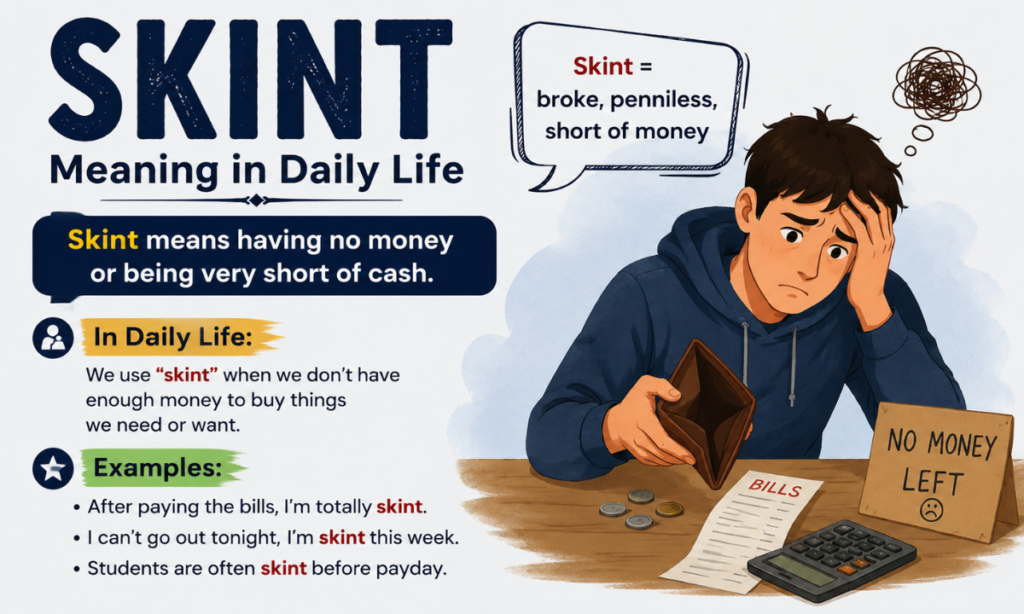
In everyday British life, “skint” comes up in all kinds of casual situations:
- Turning down plans due to a tight budget
- Joking about overspending on a night out or holiday
- Describing the stretch of time before payday
- Talking about unexpected bills or expenses
It’s such a normal part of daily conversation that it rarely needs explaining among British speakers — though it can definitely confuse non-native English speakers or people outside the UK.
Is Skint a Bad Word?
No, “skint” is not rude, offensive, or inappropriate. It’s informal slang, which means:
- It’s fine to use in casual conversations, texts, and social media.
- It’s best avoided in formal writing, professional emails, or academic settings.
- It carries no negative or vulgar connotations — it’s simply a casual way of saying “no money.”
Is Skint Still Used in 2026?
Yes, “skint” remains a widely used and instantly recognizable term in British English. It continues to appear in everyday conversation, social media captions, and even news headlines discussing cost-of-living topics. Its staying power comes from being simple, relatable, and easy to use in almost any casual context.
Related Slang Words
Broke
The most common and universally recognized term for having no money, used across English-speaking countries.
Penniless
A more literary or old-fashioned word meaning completely without money, often used to describe extreme poverty.
Loaded
Slang for having a lot of money — the direct opposite of “skint.”
Stacked
Another slang term meaning wealthy or having plenty of money, often used in casual or hip-hop-influenced speech.
Tight on Cash
A more neutral, widely understood phrase meaning someone has limited money available at the moment.
FAQs
What does skint mean?
“Skint” means having no money or very little money — it’s a British slang term for being broke.
Is skint the same as broke?
Yes, they mean the same thing, but “skint” is distinctly British while “broke” is used internationally.
Is skint offensive?
No, it’s completely informal and non-offensive, though it’s best avoided in formal writing.
Where does the word skint come from?
It likely comes from “skinned,” an early 20th-century term describing someone stripped of their money, often through gambling.
Is skint still used today?
Yes, it remains common in British English, especially in casual conversation and social media.
Final Thoughts
“Skint” is a small word with a lot of personality — a distinctly British way of saying “I have no money” that’s stuck around for nearly a hundred years. Whether you’re chatting with a friend from London or just trying to understand British slang in movies and TV shows, knowing what “skint” means (and how it differs from “broke” or “poor”) helps you follow along with confidence. It’s casual, harmless, and honestly one of the more colorful ways to talk about a tight budget.
