
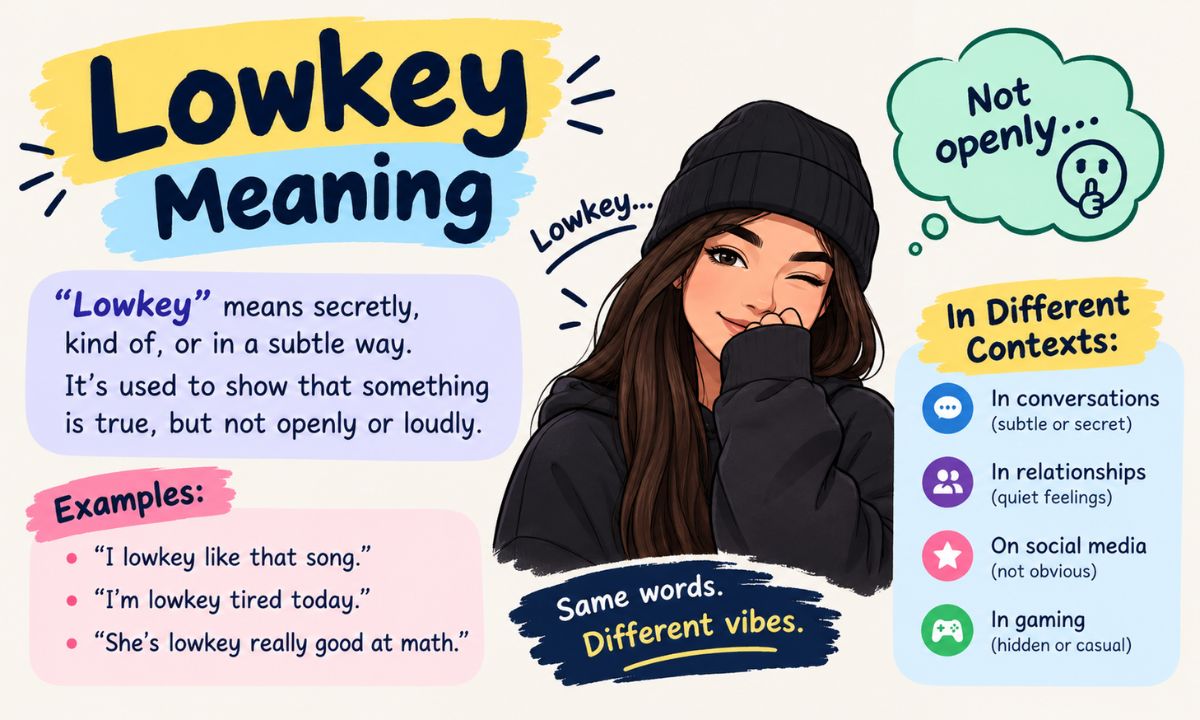

“I’m Lowkey Meaning tired.” “That song is lowkey a banger.” “I Lowkey Meaning like him.” You’ve probably seen “lowkey” dozens of times this week, and it doesn’t always mean the same thing.
Lowkey Meaning subtly, quietly, or somewhat. It softens a statement so a feeling or opinion sounds relaxed rather than dramatic. It can also describe something low-profile, like a lowkey dinner at home. This guide explains where the word comes from, how people use it online, and how to avoid mixing it up with “highkey.”
Lowkey Meaning Overview
“Lowkey Meaning” works in two main ways: as an adverb that softens a statement, and as an adjective that describes something understated.
| Detail | Quick Answer |
| Slang meaning | Subtly, kind of, secretly, a little |
| Adjective meaning | Quiet, modest, low-profile |
| Spelling | Lowkey, low-key, or low key |
| Opposite | Highkey |
| Tone | Casual, relaxed, often vulnerable |
| Texting shorthand | LWK |
| Best for | Texts, social posts, chats with friends |
What Does Lowkey Meaning in Slang?
In slang, “lowkey” signals that you feel or think something, but you’re keeping the volume down. It’s a verbal buffer.
Compare these two lines:
- “I’m stressed.”
- “I’m lowkey stressed.”
The second one sounds calmer. You’re admitting the feeling without making it a big deal. That’s why people often use lowkey to confess something a little embarrassing or controversial.
Common meanings:
- Kind of or somewhat: “I’m lowkey hungry.”
- Secretly: “I lowkey love that song.”
- Understated: “It was a lowkey hangout.”
- Quietly: “She’s lowkey the funniest person here.”
Where Did Lowkey Come From?
The word is older than most people think. Etymonline traces “low-key” to around 1895, possibly as early as 1847. It grew out of musical and sound language, meaning a deep tone or a quiet sound. The phrase was used for a quiet voice as far back as 1837.
Over time, “Low-key Meaning” came to mean modest, restrained, or not attention-seeking. Dictionary.com lists meanings like quiet, restrained, moderate, and easygoing.
The modern slang use, where it works like “kind of” or “secretly,” is commonly linked to African American Vernacular English (AAVE). Social media and Gen Z then spread it widely and turned it into a go-to softener.
Traditional Example
Before it became a text-message staple, “Low-key Meaning” mostly described events and people:
- “The wedding was a low-key affair in a friend’s backyard.”
- “Judicial elections used to be low-key events with little campaign spending.”
- “He’s a low-key guy who never brags.”
The traditional meaning is still alive and well. The newer slang just stretches it to describe feelings and opinions.
Why Do People Say Lowkey?
People say lowkey because it lowers the stakes of what they’re saying. A few reasons it stuck:
- It softens statements. “I’m lowkey mad” sounds gentler than “I’m mad.”
- It protects you socially. If someone disagrees, you can say you only kind of meant it.
- It sounds relatable. A lowkey comment feels more casual and less aggressive than a direct one.
- It adds personality. It’s a verbal habit that signals attitude.
- It’s flexible. It works for feelings, opinions, confessions, and compliments.
Low-key Meaning in Social Media
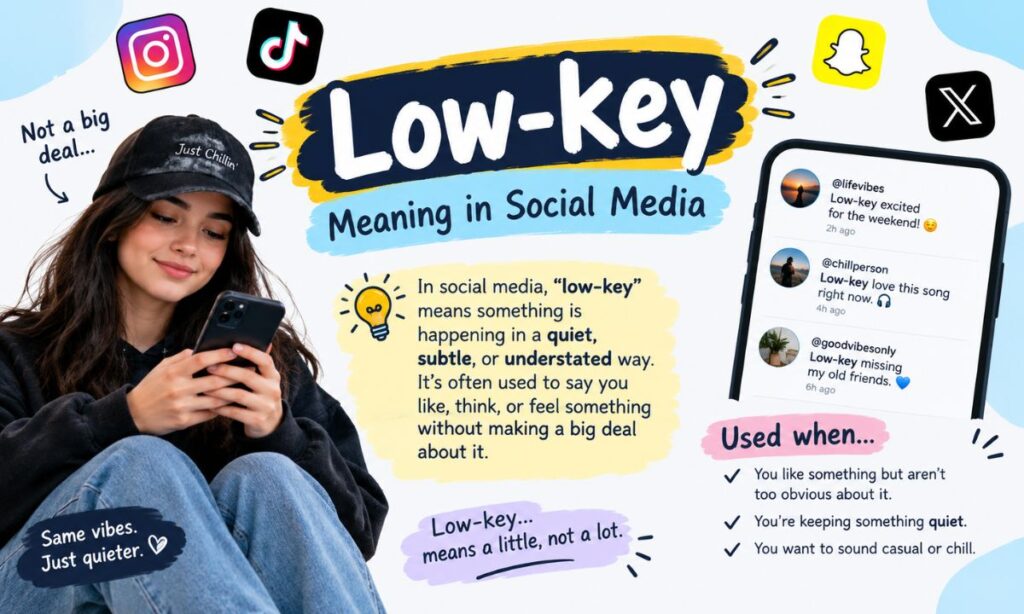
On social media, lowkey is shorthand for “I’ll say this, but quietly.” It’s used in captions, comments, and replies to admit something relatable.
Examples:
- “Lowkey the best weekend I’ve had all year.”
- “Lowkey need a vacation.”
- “This album is lowkey underrated.”
The word works well on platforms where short, casual language wins. It lets people share an opinion without sounding like they’re making a big announcement.
Lowkey Meaning in Gen Z
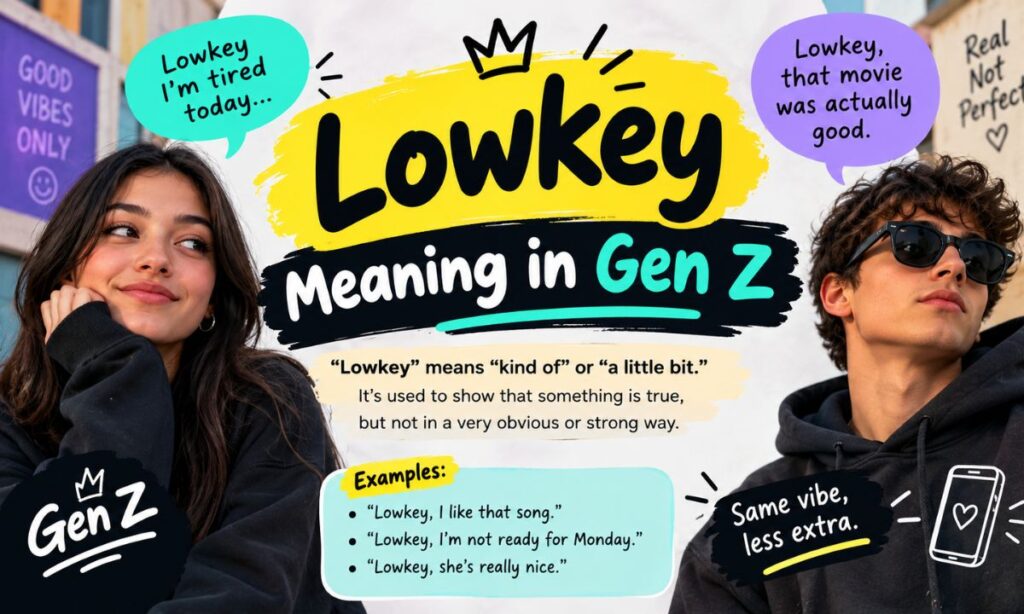
Among Gen Z, lowkey is almost a filler word. It shows up in conversation, texts, and videos, often to signal a relaxed or honest attitude.
Gen Z usage tends to include:
- Honest confessions: “I lowkey miss school.”
- Mild opinions: “That show is lowkey overrated.”
- Playful exaggeration: “I’m lowkey dying of laughter.”
- Understated hype: “Lowkey excited for Friday.”
Many young speakers use it without thinking, much like “kind of” or “sort of.”
Lowkey Meaning in Text Messages
In texts, lowkey is a short, friendly way to add nuance. Some people shorten it to LWK, which is the same word in texting shorthand.
Examples:
- “I’m lowkey nervous about tomorrow.”
- “lwk want to stay home tonight”
- “That outfit is lowkey fire.”
LWK can occasionally mean something else in affectionate messages, but “Lowkey Meaning” is by far the most common meaning. If you’re unsure, read the surrounding words.
Lowkey Meaning on TikTok
TikTok is where Lowkey Meaning gets used constantly. Creators drop it into captions, voiceovers, and comments to sound casual and honest.
Examples:
- “Lowkey obsessed with this sound.”
- “POV: you lowkey love Mondays.”
- “This is lowkey the best hack I’ve found.”
It often signals a “secret” opinion, something the creator expects viewers to relate to.
Lowkey Meaning on Instagram
On Instagram, Lowkey Meaning appears in captions, comments, and stories. It usually lowers the intensity of a statement.
Examples:
- Caption: “Lowkey living my best life.”
- Comment: “This view is lowkey unreal.”
- Story: “Lowkey tired but worth it.”
It can also describe a style: “a Lowkey Meaning outfit” means simple and understated.
Lowkey Meaning on Snapchat
On Snapchat, Lowkey Meaning fits the quick, casual vibe of snaps and chats. It’s often used to share honest, in-the-moment feelings.
Examples:
- A snap of a late-night snack: “Lowkey Meaning craving this again.”
- Chat: “lowkey wanna skip tomorrow”
- Group chat: “Lowkey a great plan, let’s do it.”
Lowkey Meaning on X (Twitter)
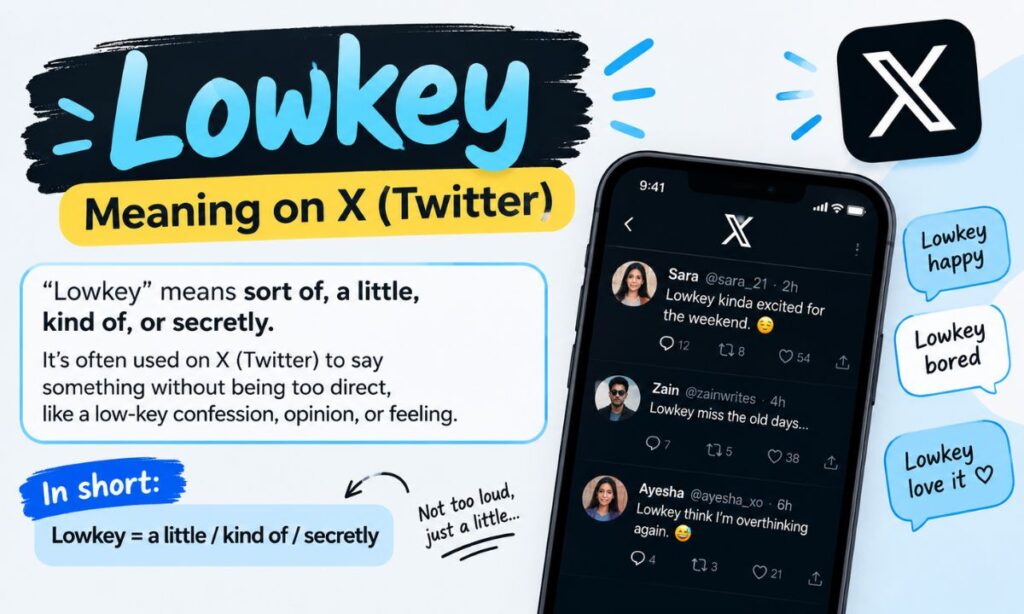
On X, Lowkey Meaning is great for short, punchy opinions and relatable thoughts. It can make a hot take feel less aggressive.
Examples:
- “Lowkey think this was the best season.”
- “Lowkey tired of everyone’s group projects.”
- “Lowkey a genius idea.”
Because posts are short, “Lowkey Meaning” packs attitude into a single word.
What Does “Lowkey Like Someone” Mean?
“Lowkey Meaning like someone” means you have a quiet or secret crush. You’re attracted to them, but you’re not ready to announce it.
Examples:
- “I lowkey like him, but don’t tell anyone.”
- “She’s lowkey my favorite person in class.”
- “I think I lowkey like my lab partner.”
It’s a safe way to admit feelings. If the other person doesn’t feel the same way, you can pass it off as no big deal.
What Does “Lowkey Obsessed” Mean?
“Lowkey obsessed” means you’re really into something, but you’re downplaying it. It’s a common phrase for shows, songs, snacks, or hobbies.
Examples:
- “I’m lowkey obsessed with this new series.”
- “Lowkey obsessed with my new headphones.”
- “We’re all lowkey obsessed with that bakery.”
Kontentino’s slang glossary offers a helpful way to read it: “lowkey obsessed” means you like something more than you’re willing to admit, or you’re trying to seem casual about your enthusiasm. Compare that with “highkey obsessed,” which means you’re openly, loudly into it.
Read our Blog on Meanvix
Lowkey vs High-Key
Highkey is lowkey’s opposite. Lowkey is quiet, and highkey is loud.
| Feature | Lowkey | Highkey |
| Volume | Quiet, understated | Loud, obvious |
| Feeling | Subtle or hidden | Open and unashamed |
| Social effect | Softens | Emphasizes |
| Example | “I’m lowkey excited.” | “I’m highkey excited.” |
| Party example | A small, relaxed hangout | A big, flashy event |
Example pairs:
- “I lowkey want to quit my job.” vs. “I highkey hate my job.”
- “That movie was lowkey good.” vs. “That movie was highkey a masterpiece.”
A quick rule: use lowkey when you’re downplaying, and highkey when you want to be heard.
Different Ways People Use Lowkey
To Express Feelings
Lowkey lets you share a feeling without drama.
- “I’m lowkey anxious about the results.”
- “I lowkey miss summer.”
To Share Opinions
It softens an opinion, especially a debatable one.
- “I lowkey think pineapple belongs on pizza.”
- “This is lowkey the best episode.”
To Admit Something
It makes confessions feel lighter.
- “I lowkey forgot your birthday, sorry.”
- “Lowkey scared of that ride.”
To Show Interest
It signals curiosity or attraction without full commitment.
- “I’m lowkey into this new band.”
- “She’s lowkey interested in joining the team.”
Common Situations Where People Say Lowkey
Talking About Crushes
- “I lowkey have a crush on him.”
- “Lowkey hoping she texts me back.”
Discussing Food
- “Lowkey the best burger in town.”
- “I lowkey want fries right now.”
Talking About Music
- “This song is lowkey a vibe.”
- “Lowkey been playing this album on repeat.”
Discussing Movies
- “That movie was lowkey underrated.”
- “I lowkey cried at the ending.”
Popular Lowkey Expressions
Here are phrases you’ll see most often:
| Expression | What It Means |
| Lowkey obsessed | Really into something, but playing it cool |
| Lowkey like (someone) | A quiet crush |
| Lowkey tired | A bit worn out |
| Lowkey underrated | Deserves more credit than it gets |
| Lowkey fire | Surprisingly great |
| Lowkey scared | Nervous but not announcing it |
| Lowkey a vibe | Quietly enjoyable |
| Lowkey kind of | Doubly softened |
Common Examples
- “I’m lowkey proud of myself today.”
- “This café is lowkey perfect for studying.”
- “Lowkey can’t wait for the weekend.”
- “Honestly, lowkey a good idea.”
- “We had a lowkey night at home.”
Is Lowkey Positive or Negative?
Lowkey isn’t positive or negative on its own. It’s a tone-setter that depends on what follows it. It makes any statement quieter, whether the statement is happy, sad, or complaining.
Positive Examples
- “Lowkey the best day I’ve had in weeks.”
- “I’m lowkey so proud of you.”
- “This place is lowkey amazing.”
Negative Examples
- “I’m lowkey annoyed right now.”
- “This meeting was lowkey a waste of time.”
- “I lowkey hate waiting in lines.”
A practical tip: if someone says lowkey about a complaint, they may be less upset than they sound. If they say it about a compliment, it’s often more sincere than it sounds.
When Not to Use Lowkey
Lowkey is casual slang, so it fits some places better than others. Skip it when:
- Writing formal emails or school essays.
- Speaking in a business meeting or interview.
- Texting customers on behalf of a company.
- Talking with someone who may not know the slang.
In those settings, try “somewhat,” “quietly,” “honestly,” or “to be candid.”
Frequently Asked Questions
What does lowkey mean in slang?
Lowkey means subtly, quietly, or somewhat. It softens a statement so it sounds relaxed.
What does lowkey mean in text?
In text, it signals an understated feeling or opinion, like “I’m lowkey tired.” It’s sometimes shortened to LWK.
Where did lowkey come from?
“Low-key” dates to the 1800s and first related to quiet sounds and tones. The modern slang use is often tied to AAVE and spread through social media.
What does lowkey mean in Gen Z slang?
For Gen Z, lowkey is a casual softener that means “kind of,” “secretly,” or “a little.”
What does lowkey like someone mean?
It means you have a quiet or secret crush on someone.
What does lowkey obsessed mean?
It means you’re really into something but playing it down. It’s the quieter version of “highkey obsessed.”
What is the difference between lowkey and highkey?
Lowkey is subtle and understated, while highkey is obvious and unashamed.
What does lowkey mean on TikTok?
On TikTok, it’s used for honest, relatable opinions, like “lowkey obsessed with this song.”
What does lowkey mean on Instagram?
It usually softens a caption or comment, such as “lowkey living my best life.”
What does lowkey mean on Snapchat?
It’s a casual way to share a quick, honest thought in a snap or chat.
What does lowkey mean on X (Twitter)?
It softens a short opinion or relatable thought, like “lowkey think this was the best season.”
What does LWK mean?
LWK is texting shorthand for “low-key.” It means the same thing.
Is lowkey positive or negative?
Neither. It simply lowers the volume of whatever you’re saying.
Is lowkey spelled “low-key” or “lowkey”?
Both are correct. “Low-key” is the traditional spelling, while “lowkey” is common in texts and social media.
Conclusion
“Lowkey” is a small word with a lot of range. It can describe a quiet party, soften a confession, or hide just how much you love a song. Its roots go back to sound and music in the 1800s, and Gen Z gave it a new life as a social softener.
Use it when you want to sound relaxed and honest, and switch to “highkey” when you want to be loud about it. In formal settings, choose plainer words. Either way, you’ll now know exactly what someone means when they say they’re “lowkey” about something.
