


Poison Tree Tattoo Meaning have a strange kind of magic. They don’t shout for attention — they make you lean in and ask, “wait, what does that actually mean?” One design that keeps coming up in that conversation is the poison tree tattoo. It looks gothic, moody, and a little unsettling, but underneath the twisted branches is one of the most emotionally honest tattoo concepts out there: the idea that unspoken anger doesn’t disappear — it grows.
This article breaks down where the symbol comes from, what it really represents, and how people are turning literary heartbreak into meaningful body art.
What Does a Poison Tree Tattoo Mean?
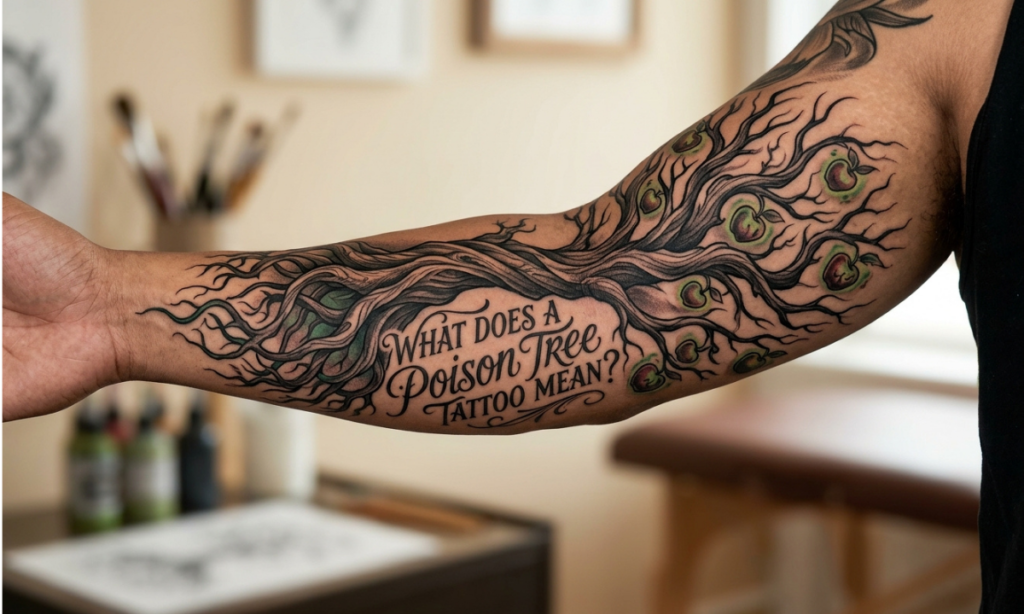
At its core, a poison tree tattoo represents suppressed anger and the slow, silent damage of unresolved emotion. It’s not about being a “dark” or “toxic” person — it’s a visual warning about what happens when resentment is buried instead of released.
The tree itself becomes a metaphor:
- Roots = the origin of a wound or grudge
- Trunk = the slow build-up of bitterness
- Fruit = the final, often destructive result of unspoken rage
People choose this Poison Tree Tattoo Meaning not to celebrate anger, but to mark the moment they recognized it — and often, the moment they chose to let it go instead of letting it grow.
Where Does the Poison Tree Symbol Come From?
The imagery traces directly back to English poet William Blake, whose 1794 poem “A Poison Tree” (from his collection Songs of Experience) is the foundation almost every tattoo of this kind is built on. Blake wrote about two very different reactions to anger — one shared, one hidden — and what happens when the hidden kind is left to fester.
This poem struck such a nerve that it’s still quoted in psychology discussions, literature classes, and therapy circles more than two centuries later, which is exactly why it made the jump from page to skin.
The William Blake Poem: A Quick Breakdown
Without quoting the poem directly, here’s the emotional arc in plain language:
- Stanza 1 – The speaker gets angry at a friend, talks about it openly, and the anger fades.
- Stanza 2 – The speaker gets angry at an enemy, says nothing, and instead nurtures the anger in secret — fake smiles, hidden tears, quiet resentment.
- Stanza 3 – The anger grows like a living thing, eventually producing something tempting on the outside but poisonous underneath.
- Stanza 4 – The enemy is drawn to it, consumes it, and the consequences are fatal — leaving the speaker with a hollow kind of relief.
The takeaway isn’t “hide your feelings forever.” It’s the opposite: Blake is showing readers what happens when they don’t deal with anger honestly.
Dark Tattoo Meaning
Dark tattoo designs — think bare branches, crows, skulls, thorns, or shadowy trees — don’t automatically mean something morbid. In tattoo culture, “dark” usually symbolizes:
- Emotional depth or complexity
- Transformation through hardship
- Confronting rather than hiding pain
- The contrast between struggle and growth
A poison tree tattoo fits neatly into this category because it doesn’t glamorize suffering — it visualizes the process of it, which is part of why it resonates so strongly with people who’ve been through something heavy.
Biblical and Historical Roots of the Poison Tree
While Blake’s poem is the direct source, the poisoned or forbidden tree motif has much older roots:
- Genesis / The Tree of Knowledge – forbidden fruit tied to temptation and consequence
- Ancient Persian literature – trees symbolizing betrayal hidden behind beauty
- Renaissance art – corrupted fruit representing moral decay or secret sin
Blake didn’t invent the “beautiful but deadly” tree — he modernized a symbol that cultures have used for centuries to talk about temptation, deception, and hidden danger.
What Emotions Does a Poison Tree Tattoo Represent?
People rarely get this tattoo on a whim. It usually connects to a specific emotional chapter. Common feelings tied to the design include:
- Suppressed anger or long-held resentment
- Betrayal by someone close
- Emotional exhaustion from staying silent
- A reminder to express feelings instead of bottling them
- Personal growth after a toxic relationship or environment
Read our Blog on Meanvix
Poison Tree Tattoo Designs: What the Visual Elements Mean
Every element artists add to this tattoo carries its own layer of meaning.
| Visual Element | Symbolic Meaning |
| Twisted or gnarled branches | Inner turmoil, complicated emotions |
| Bright or glowing apple/fruit | Temptation, deceptive beauty, consequence |
| Bare, leafless tree | Emotional exhaustion, isolation |
| Cracked bark | Silent struggle, hidden pain |
| Roots extending outward | The origin story behind the anger |
| Birds in the branches | Hope, freedom, or eventual release |
| Blooming flowers among decay | Growth emerging from suffering |
| Blackwork/shadow style | Depth, secrecy, unresolved emotion |
Artists often blend a few of these to tell a fuller story — for example, a tree with dead branches on one side and blossoms on the other to show transformation.
Who Gets Poison Tree Tattoos and Why?
This design tends to attract:
- Literature lovers who connect with Blake’s poetry specifically
- People healing from betrayal, using the tattoo as a permanent reminder to communicate rather than suppress
- Therapy-minded individuals who see it as a symbol of emotional self-awareness
- Dark aesthetic fans drawn to gothic, blackwork, or botanical-horror styles
- Sleeve or back-piece collectors looking for a design with narrative depth
Poison Tree Tattoo vs. Other Dark Tree Tattoos: Key Differences
Not every eerie tree tattoo carries the same meaning. Here’s how the poison tree compares to other popular dark tree designs.
| Tattoo Style | Core Meaning | Common Imagery |
| Poison Tree | Suppressed anger, hidden resentment | Twisted branches, glowing fruit, cracked bark |
| Dead/Bare Tree | Loss, grief, endings | Leafless branches, gray tones |
| Family Tree | Heritage, connection, roots | Names, birds, intertwined branches |
| Tree of Life | Growth, balance, interconnectedness | Full canopy, deep roots, vibrant colors |
| Burnt Tree | Destruction followed by rebirth | Charred trunk, new sprouts |
The poison tree stands out because it’s the only one built around a specific literary narrative rather than a general life theme.
Placement Ideas and What They Add to the Meaning
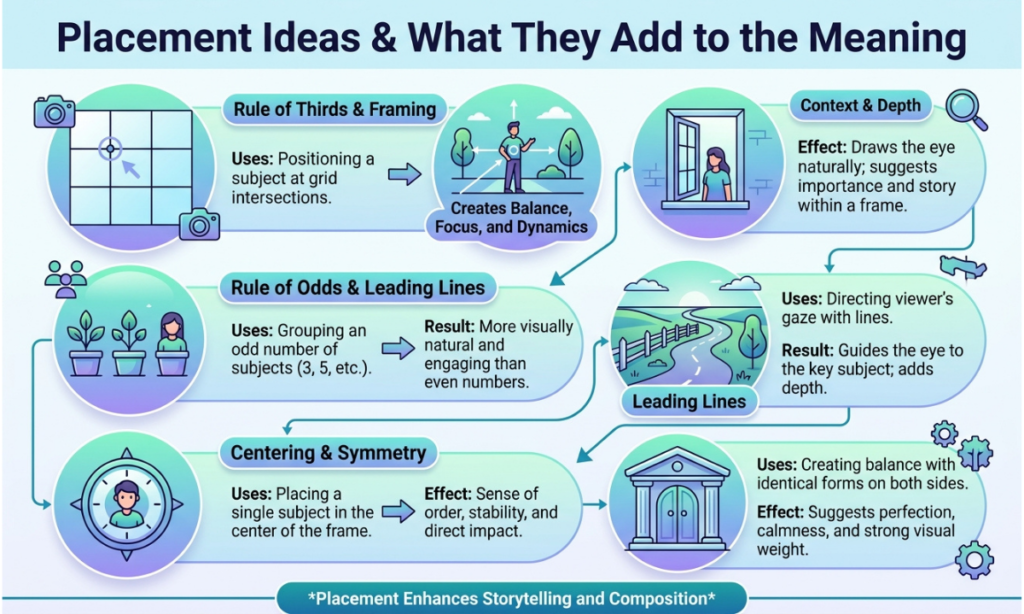
Placement can quietly shift how a tattoo reads:
- Forearm – bold and visible, signals confidence in owning the story
- Back piece – large canvas for detailed branches, roots, and fruit
- Ribcage – more private placement, fitting for a personal or painful story
- Behind the ear/neck – subtle, symbolic of a “quiet” internal struggle
- Fingers/hands – minimalist take, often paired with roots trailing onto the wrist
Common Mistakes People Make With This Tattoo
- Choosing overly complex designs that lose clarity when the tattoo ages
- Skipping research into the meaning, then regretting the “angry” connotation
- Picking a generic tree design and calling it a poison tree without symbolic elements (fruit, cracked bark, etc.)
- Not consulting an experienced artist for fine linework, which this style depends on
- Ignoring placement and skin tone considerations for blackwork shading
Does the Poison Tree Tattoo Have a Positive Meaning?
Yes — and this is where a lot of people get surprised. While the poem is a warning, many wearers interpret the tattoo as a symbol of release rather than resentment. It can represent:
- The decision to stop suppressing emotions
- A completed chapter of healing after anger or betrayal
- Self-awareness and emotional growth
- A reminder to talk things out before they “grow”
In therapy-informed circles, the poem is increasingly read as an invitation to process pain early — and the tattoo often reflects that same intention.
Related Keywords Worth Knowing
If you’re researching this design further, you’ll likely come across these closely related terms: A Poison Tree poem meaning, William Blake tattoo ideas, dark botanical tattoo, suppressed anger tattoo, blackwork tree tattoo, gothic tree tattoo symbolism, and tree of life vs poison tree tattoo.
Frequently Asked Questions
Is a poison tree tattoo considered negative or bad luck?
No. It’s a symbolic warning about suppressed anger, not a curse — most wearers see it as a personal growth reminder rather than something negative.
Do I need to know the William Blake poem to get this tattoo?
Not necessarily, but knowing the story adds meaning and helps you choose design elements (fruit, roots, branches) that actually reflect the symbolism.
Can this tattoo be combined with other symbols?
Yes — birds for hope, blooming flowers for healing, or a semicolon for mental health awareness are common and meaningful pairings.
Final Thought
A poison tree tattoo isn’t really about darkness for the sake of aesthetics — it’s about honesty. It quietly says, “I’ve felt this. I understand what happens when anger goes unspoken.” For many, it becomes less of a warning and more of a permanent commitment to speak up instead of staying silent.
You Might Also Like
- Helonium: Meaning, Definition, Origin, Uses, and Scientific Facts — a breakdown of this lesser-known term and where it actually comes from.
- Encuentra El Ritmo Meaning — what this popular Spanish phrase means and how it’s used in everyday conversation.
- Undulating Kiss Meaning: Facts Behind This Romantic Term — the origin and symbolism behind this poetic phrase.
Conclusion
The poison tree tattoo proves that some of the most powerful body art isn’t loud — it’s layered. Rooted in a 200-year-old poem about anger, betrayal, and silence, this design has quietly become one of the most meaningful choices in dark tattoo culture. Whether you connect with it as a warning, a memory, or a symbol of healing, its real strength lies in what it asks you to reflect on: are you letting your anger grow in silence, or are you finally choosing to speak it out loud?
