
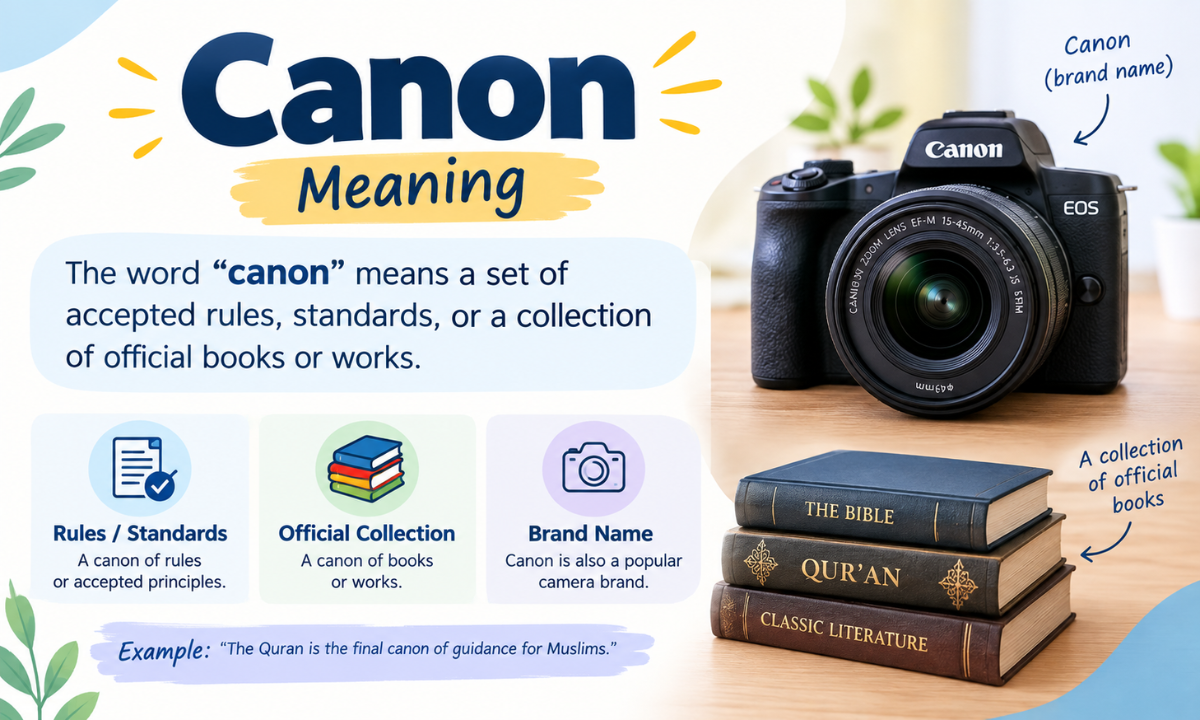

Canon Meaning If you’ve spent any time in fandom spaces, you’ve seen the word “canon” thrown around constantly. Someone insists a ship is “canon,” another person calls their favorite theory “headcanon,” and somewhere in the replies, someone’s arguing about what’s “fanon” versus what’s actually official.
It can get confusing fast — especially since “canon” also shows up outside fandom entirely, in religion, literature, and even everyday texting slang like “canon event.” This guide breaks down every meaning of canon, how it’s used across different communities, and why fans care so much about it.
Canon Meaning Overview
In simple terms, canon refers to the official, creator-approved facts, events, and characters within a fictional universe. If it happened in the actual book, show, movie, or game — and the creators confirmed it — it’s canon.
Read our Blog on Meanvix
Here’s a quick breakdown of the term’s core uses:
| Term | Meaning | Example |
| Canon | Officially confirmed by the creator/source material | “It’s canon that they got married in the finale” |
| Headcanon | A personal, unofficial interpretation | “My headcanon is that he’s left-handed” |
| Fanon | A widely shared fan belief, not officially confirmed | “It’s fanon that they’re siblings” |
| Canon event | A defining, unavoidable life moment (texting slang) | “Getting your heart broken in high school is a canon event” |
What Does Canon Mean in Fandom?
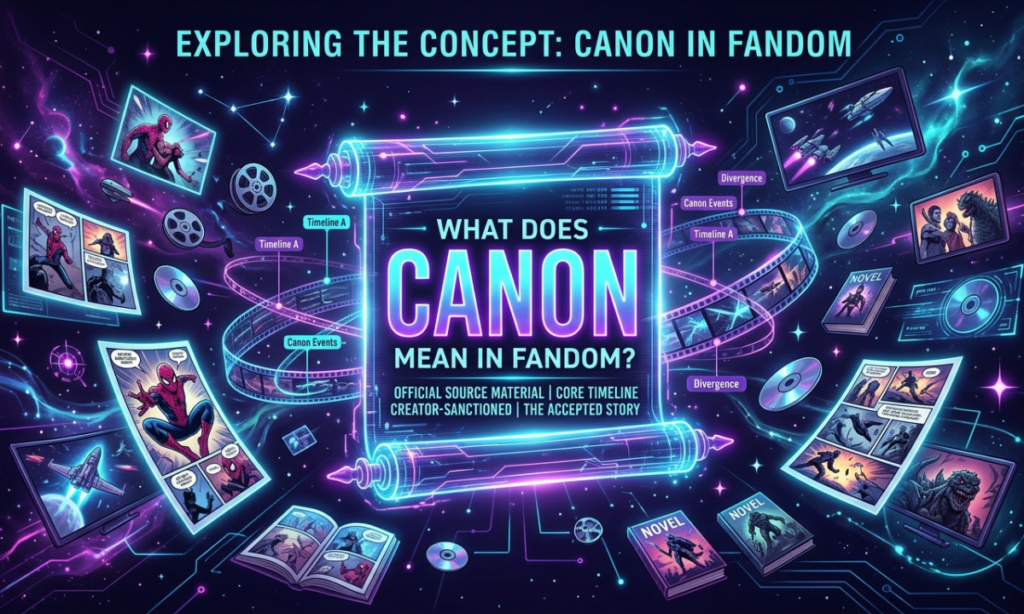
In fandom spaces, canon is the gold standard of truth. It refers to everything that’s explicitly stated or shown within the original source material the books, films, shows, games, or comics themselves.
According to Wikipedia’s entry on fictional canon, the term describes the material accepted as officially part of a story by its creators, distinguishing it from fan-made content like fanfiction or fan theories. If the author, showrunner, or studio confirms something as true within the story, it becomes part of canon — full stop.
Fans use canon to settle debates. Saying “that’s canon” ends an argument, because it means the claim is backed by the actual source material rather than personal opinion or wishful thinking.
Key traits of canon content:
- It comes directly from the original creator or official source
- It’s treated as fact within the fictional universe
- It can expand over time (sequels, spin-offs, official statements)
- It can also be retconned (retroactively changed or removed) by creators
Canon Meaning in Texting
Outside of story discussions, “canon” has taken on a completely different, more casual meaning in everyday texting and social media slang.
A “canon event” refers to a defining moment in someone’s life — something that shapes who they are, often used humorously about relatable, universal experiences. The phrase originated from Spider-Man: Across the Spider-Verse, where characters describe certain painful life events as unavoidable “canon events” necessary for becoming who they’re meant to be. TikTok quickly turned this into a viral meme format, with users captioning everyday struggles as their own personal canon events.
Example texts:
- “getting embarrassed in front of my crush in 8th grade… it was a canon event”
- “bombing that job interview was a canon event, I needed the humbling”
- “can’t stop him from dyeing his hair blue, it’s a canon event”
This slang usage has nothing to do with fictional universes directly — it borrows the idea of canon (something that’s fated to happen and shapes the story) and applies it to real life.
Canon vs. Headcanon
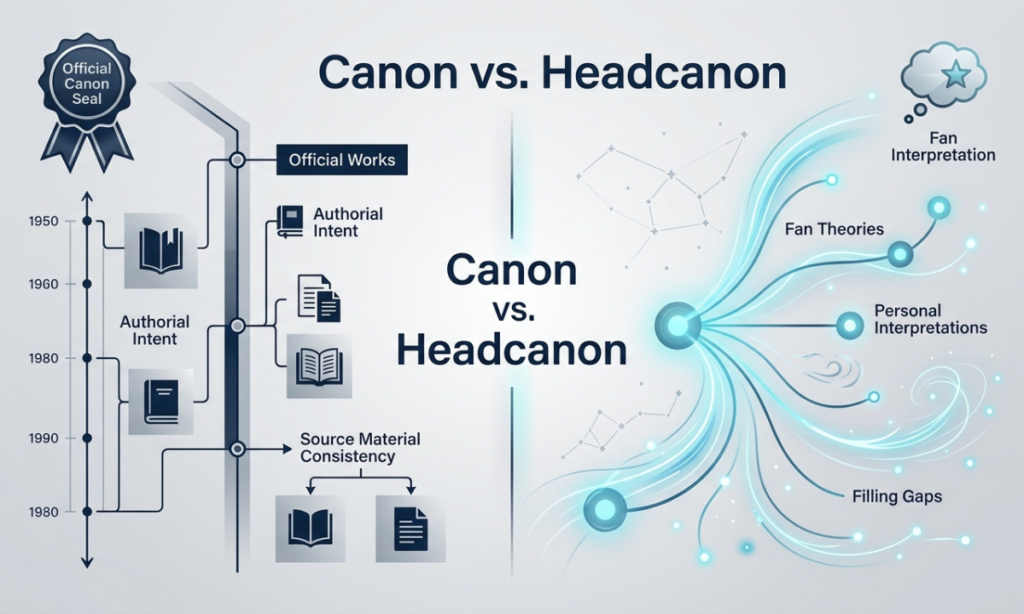
These two terms are related but mean very different things.
| Canon | Headcanon |
| Officially confirmed by the creator | A personal, unofficial belief or interpretation |
| Applies to the entire fandom | Exists mainly in one person’s mind (or a small group) |
| Cannot be debated once confirmed | Can be freely imagined, debated, or dismissed |
| Comes from the source material | Comes from a fan’s own imagination |
A headcanon is essentially “a canon that exists only in your head.” It fills in gaps the official story leaves open — like imagining a character’s backstory, sexuality, or personality traits that were never explicitly confirmed on-screen or on the page.
Example: If a show never states a character’s birthday, but you personally believe it’s in October, that’s your headcanon — not canon, since it isn’t confirmed anywhere in the original material.
Interestingly, headcanons sometimes become canon. Fan-created details occasionally get adopted by original creators and folded into the official story later on.
Cannon or Canon?
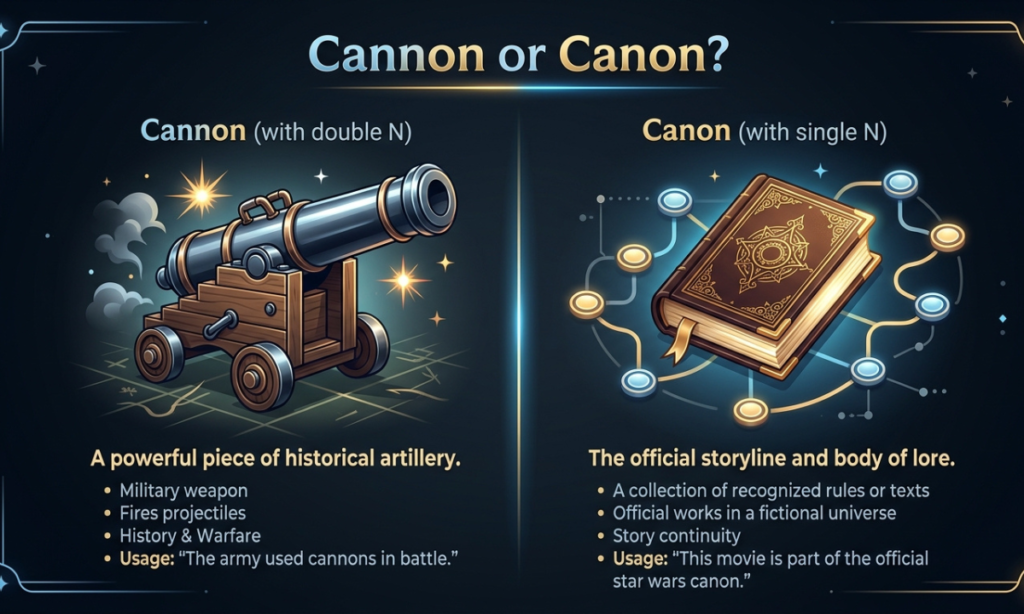
This mix-up trips up a lot of people, and it’s an easy mistake to make since the words sound identical.
- Canon (one “n”) = the official body of work or accepted truth in a fictional universe
- Cannon (two “n”s) = a large weapon that fires projectiles
So “headcanon” is correct — not “headcannon,” even though the misspelling is extremely common across fan forums and social media. If you’re ever unsure, remember: no explosives involved, just one “n.”
Canon vs. Fanon
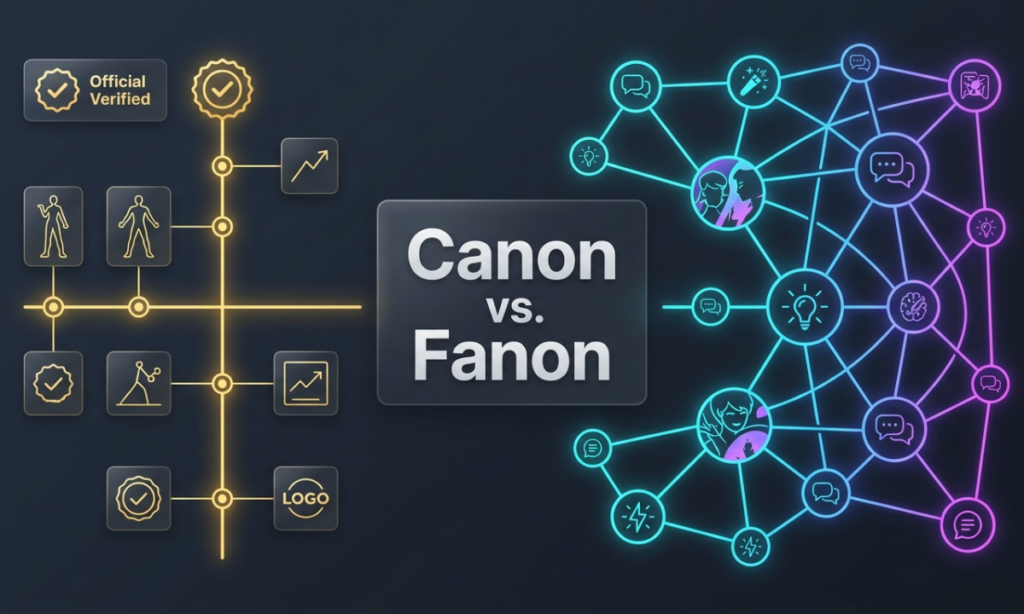
Fanon is where things get a little more nuanced. It’s a blend of “fan” and “canon,” and it refers to ideas that aren’t officially confirmed but are so widely accepted by the fan community that they start to feel canon anyway.
How fanon typically forms:
- A fan creates a headcanon (personal interpretation)
- Other fans agree with it and start repeating it
- It spreads across fan fiction, fan art, and discussions
- Eventually, it becomes so common that new fans assume it’s official
A useful analogy: if canon is the law, fanon is popular opinion that isn’t actually law — but everyone treats it like it is anyway. Sometimes fanon is later disproven by new canon material, which fans call getting “jossed” — a term describing when new official content invalidates a widely believed fan theory.
Example of fanon becoming canon: In some long-running franchises, fan-given nicknames or unofficial details for minor characters have later been officially adopted by the creators themselves, blurring the line between fan invention and official story.
Canon Meaning in Anime and Movies
In anime and movie fandoms, canon usually separates what actually happened in the original source (manga, novel, or film) from adaptations, spin-offs, or fan-made content.
Common canon-related terms in this space:
- Canon arc — a storyline taken directly from the original manga or source material
- Filler arc — non-canon content created for anime that doesn’t appear in the source material
- Canon couple — a romantic pairing officially confirmed within the story itself
- Non-canon ending — an alternate ending (often from a movie or OVA) that isn’t considered part of the main storyline
Fans often specifically seek out “canon-compliant” fan fiction, meaning stories that stay consistent with everything officially established, rather than deviating into alternate universes.
Canon Meaning in Gaming
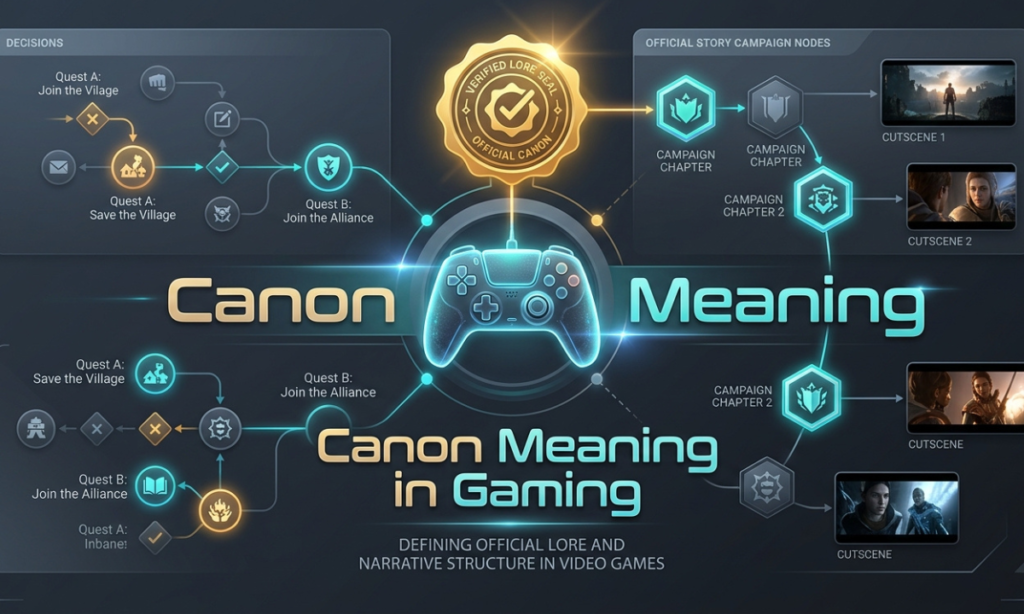
Gaming fandoms use canon similarly to movies and anime — it separates the “official” storyline from side content, fan theories, or non-canonical choices players make during gameplay.
This gets especially tricky in games with multiple endings or player choices, since not every possible outcome can be canon. Developers often clarify which ending or choice is considered the “true” canon path in later sequels or official statements.
Examples of canon debates in gaming:
- Which ending of a branching story is considered official
- Whether a character’s default name/appearance is canon
- Whether spin-off games count as canon to the main series timeline
Canon Meaning Outside Fandom
While fandom popularized modern usage, “canon” existed long before internet culture — and it still carries serious meaning outside pop culture discussions.
Canon in Religion
In a religious context, canon refers to the official, authoritative set of texts accepted by a religious tradition. The clearest example is the biblical canon — the officially recognized books that make up the Bible, as determined by religious authorities over centuries. Not every ancient religious text made it into the canon; many were excluded and are now referred to as apocryphal.
Canon in Literature
In literature, “canon” refers to the body of works considered essential, influential, or foundational within a genre, language, or academic field. For example, the works of Shakespeare are widely considered part of the literary canon, alongside other authors whose work has shaped Western literary tradition. Being included in “the canon” academically often signals a work’s lasting cultural or artistic significance.
Why Do Fans Care About Canon?
Canon matters deeply to fans because it represents shared, agreed-upon truth within a community that otherwise thrives on interpretation and imagination.
Here’s why the distinction matters so much:
- It settles debates — canon provides objective proof in arguments about characters or plot
- It shapes fan creativity — fanfiction writers often choose to stay “canon-compliant” or deliberately break from canon (AU, or alternate universe, content)
- It affects emotional investment — fans often feel strongly about ships, character arcs, or endings becoming official
- It builds community identity — knowing canon deeply is often seen as a mark of a “real” fan versus a casual viewer
For many fans, canon isn’t just trivia — it’s the foundation that makes deeper fan engagement (theories, art, fanfiction) meaningful in the first place.
Canon Examples
To make this more concrete, here are a few simplified examples across different types of canon:
- Canon: A show’s finale confirms two characters get married on-screen.
- Headcanon: A fan personally imagines that a background character has a secret hobby never mentioned in the show.
- Fanon: A large portion of the fandom believes two characters are best friends, even though the show never confirms this directly, purely based on their limited interactions.
- Non-canon: An alternate movie ending that was filmed but ultimately not included in the official theatrical release.
Is Canon a Good Thing?
Generally, yes — canon is considered valuable because it gives structure, consistency, and shared meaning to a fictional universe. Without canon, there’d be no baseline for what’s actually “true” within a story, making community discussions, theories, and analysis far more difficult.
That said, canon isn’t always universally loved. Fans sometimes disagree with new canon developments (a controversial plot twist, an unpopular couple becoming official, or a beloved headcanon being “jossed”). In these cases, some fans choose to enjoy the material as an alternate universe (AU) instead, effectively ignoring the parts of canon they dislike.
Is Canon Still Used in 2026?
Yes, and its usage has only grown. Canon-related terminology remains a core part of fandom vocabulary across anime, movies, gaming, and books, while newer casual spinoffs like “canon event” continue thriving in everyday texting and social media slang. If anything, the word has become more mainstream since 2023, moving beyond niche fandom circles into general internet culture.
Related Internet Terms
If you’re building out your fandom and internet slang vocabulary, these related terms are worth knowing:
- Retcon — when creators retroactively change or erase previously established canon
- AU (Alternate Universe) — fan-created content that deliberately diverges from canon
- Jossed — when a fan theory or headcanon is disproven by new canon material
- Canon-compliant — fan content that stays fully consistent with official canon
- Ship — a romantic pairing fans support, whether canon or not
- Coded — when a character is implied (but not officially confirmed) to have a certain trait or identity
FAQs About Canon Meaning
What does it mean when something is “canon”?
It means the event, relationship, or detail is officially confirmed as true within the original story by its creators.
What’s the difference between canon and headcanon?
Canon is officially confirmed by the source material, while headcanon is a personal, unofficial interpretation a fan believes.
Is fanon the same as canon?
No — fanon is a widely accepted fan belief that isn’t officially confirmed, even if it feels true to much of the fandom.
What is a “canon event” in texting slang?
It’s a defining life moment that shapes who someone becomes, often used humorously about relatable struggles or milestones.
Is it spelled “canon” or “cannon”?
It’s “canon” (one “n”) when referring to official story facts; “cannon” (two n’s) refers to the weapon.
Can a headcanon become an official canon?
Yes creators sometimes adopt popular fan ideas and officially confirm them in later material.
Final Thoughts
“Canon” has grown from a niche literary and religious term into one of the most widely used words in modern fandom — and even everyday texting. Whether you’re settling a debate about your favorite show, distinguishing your headcanons from actual confirmed facts, or just trying to understand a viral TikTok trend, knowing how canon works will help you navigate fan communities (and internet slang) with a lot more confidence.
As fandoms keep growing and franchises keep expanding, expect “canon” — in all its forms — to stick around for a long time.
