

If you’ve ever received a text that simply said “Meaning of “Yo”” and wondered what it meant or how to respond, you’re not alone. This tiny word has been part of casual speech for decades, and it’s just as common in text messages and social media comments today.
This guide covers everything you need to know about Meaning of “Yo” from its origins to how it’s used in modern texting and online conversations.
Yo Meaning Overview
“Yo” is a versatile slang interjection primarily used as a casual greeting, similar to “hi” or “hey.” Depending on tone and context, it can also express excitement, grab someone’s attention, or emphasize a statement.
Here’s a quick breakdown of its main functions:
| Use Case | Example |
| Greeting | “Yo, what’s up?” |
| Getting attention | “Yo, look at this!” |
| Expressing surprise | “Yo, that’s crazy!” |
| Emphasis | “That was wild, yo.” |
Because it’s so short and flexible, “yo” fits naturally into texting, DMs, and everyday casual speech.
What Does Yo Mean in Slang?
In slang, “Meaning of “Yo”” is primarily used as an informal greeting, functioning much like “hi” or “hey.” It’s casual, friendly, and typically used between people who know each other well or are speaking in a relaxed setting.
Beyond greetings, “yo” can also serve as:
- An attention-grabber before making a point
- An exclamation of surprise or excitement
- A verbal filler or emphasis word at the end of a sentence, especially in certain dialects
This flexibility is part of why the word has stuck around for so long in casual English.
Yo Meaning in Text Messages
In texting, “Meaning of “Yo”” is usually the first word in a message, used to casually open a conversation. It’s short, low-effort, and doesn’t require any formality.
Common examples include:
- “Yo, you free later?”
- “Yo, did you see the game last night?”
- “Yo” (sent alone, simply to say hello or check if someone’s around)
Meaning of Yo in Text
When used on its own, “Meaning of “Yo”” in a text message is essentially a quick hello. It signals that the sender wants to start a conversation without needing a long introduction.
Yo Meaning in Chat Reply

When “Meaning of “Yo”” is used as a reply rather than an opener, it usually acknowledges a message casually — similar to saying “hey” back. For example, if someone texts “Meaning of “Yo”” first, replying with “yo, what’s up?” keeps the tone light and informal.
Yo Meaning on Social Media
On platforms like Instagram, TikTok, and X, “yo” is frequently used in comments and captions to grab attention or express reaction. It’s especially common in comment sections as a casual way to jump into a conversation.
Typical social media uses include:
- Starting a comment: “Yo this is actually amazing”
- Tagging a friend with excitement: “Yo @friend look at this”
- Reacting to a viral post: “Yo no way this is real”
Its brevity makes it perfect for fast-scrolling platforms where quick, casual reactions are the norm.
Yo vs Hey
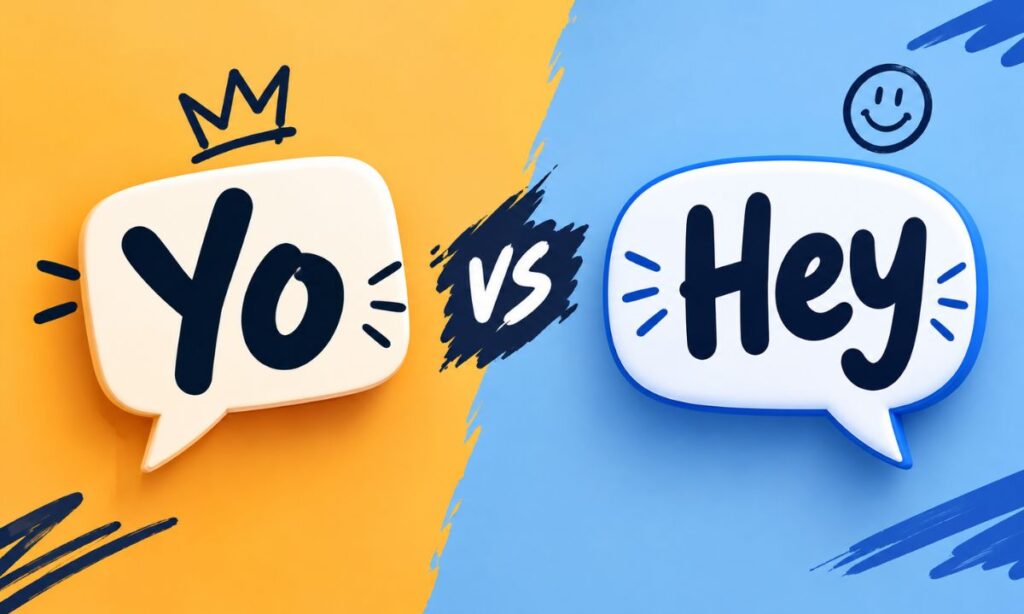
Both “Meaning of “Yo”” and “Meaning of hey” are casual greetings, but they carry slightly different tones.
| Feature | Yo | Hey |
| Tone | Very casual, urban-influenced | Casual, but slightly more neutral |
| Common setting | Friends, informal texting | Broader use, including semi-formal chats |
| Cultural association | Rooted in hip-hop and urban slang | General English greeting |
“Yo” tends to feel more energetic and informal, while “hey” is a bit more universally accepted across different social settings.
read our Blog on Meanvix
Yo vs Hi

“Yo” and “hi” both function as greetings, but their formality levels are very different.
- “Hi” is neutral and works in almost any setting, including professional or first-time interactions.
- “Yo” is strictly casual and typically reserved for friends, peers, or informal online conversations.
Using “Meaning of “Yo”” with someone you don’t know well like a coworker or a new acquaintance — can come across as overly familiar or unprofessional.
Is Yo Rude?
No, “Meaning of “Yo”” is not inherently rude. In most everyday and online contexts, it’s simply a casual greeting or attention-getter.
However, context matters:
- Among friends, it’s completely normal and friendly.
- In professional emails or formal conversations, it can seem too casual or even disrespectful.
- Tone of voice or accompanying words can shift its meaning for example, “Meaning of “Yo”!” shouted abruptly might come across as aggressive depending on the situation.
As with most slang, appropriateness depends heavily on who you’re talking to and the setting.
Where Did Yo Come From?
“Meaning of “Yo”” has a surprisingly long history. According to etymology records, it was used as far back as the 15th century among sailors and huntsmen as a call denoting effort or attention. Its modern greeting usage became especially popular during World War II, reportedly used as a common response during military roll calls.
Its widespread modern popularity, however, is closely tied to Philadelphia’s Italian-American community in the 1940s, where it became a common local greeting. From there, it spread to other communities in the city, including Philadelphia’s African American population, before expanding further through hip-hop culture in the late 20th century.
The word gained mainstream visibility through shows like Yo! MTV Raps and pop culture moments like Sylvester Stallone’s iconic Rocky Balboa line, “Yo, Adrian!” Today, it’s recognized and used across the world, especially in casual and digital communication.
Is Yo Still Popular in 2026?
Yes, “yo” remains a widely used and recognized casual greeting, especially in texting, gaming chats, and social media comments. While formal communication has shifted toward more polished language, casual digital spaces continue to favor short, punchy expressions like “Meaning of “Yo”” for quick, low-effort greetings and reactions.
Its long history and cultural roots have helped it remain relevant across generations, unlike many short-lived internet slang terms.
Related Internet Slang
If you’re brushing up on casual greetings and internet slang, these related terms are also worth knowing:
- Sup – short for “what’s up,” used as a casual greeting
- Hiya – a playful, friendly version of “hi”
- Ayo – an energetic variation of “yo,” often used for emphasis
- Wassup – a casual way of asking how someone is doing
- Heyyy – an extended, enthusiastic version of “hey”
Conclusion
“Yo” has evolved from an old nautical call into one of the most recognizable casual greetings in modern English. Whether used to say hello, grab attention, or react to something exciting online, its short and flexible nature makes it a staple of texting and social media conversations Understanding when and how to use “Meaning of “Yo”” and recognizing that it’s best suited for casual settings can help you communicate naturally without misreading the tone of a conversation.
FAQs
What does “Meaning of “Yo”” mean in texting?
It’s a casual greeting, similar to “hi” or “hey,” often used to start a conversation.
Is “yo” appropriate for professional messages?
No, it’s considered too casual for formal or professional communication.
Where did the word “yo” originate?
It dates back centuries but gained modern popularity through Philadelphia’s Italian-American community in the 1940s.
Is “yo” considered slang?
Yes, it’s classified as a casual slang interjection used mainly in informal speech and texting.
Can “yo” be used to express surprise?
Yes, depending on tone, “yo” can express excitement, shock, or disbelief.
