

Your friend hasn’t replied in three days, and someone in the group chat says, “She’s totally MIA Meaning.” Nobody is worried. They just mean she’s gone quiet.
“MIA” is a short word with a heavy past. This guide covers what MIA means, where it came from, how it’s used in texts, games, and relationships, and when you should be careful with it.
What Does MIA Mean?
Simple Definition
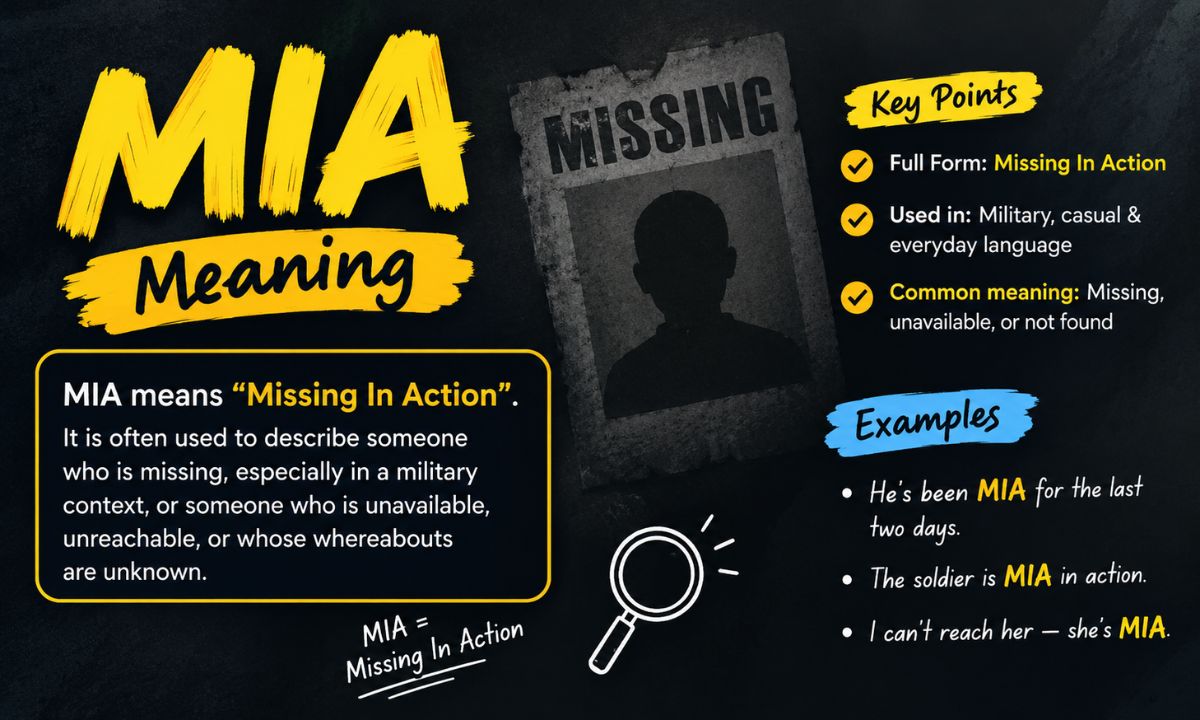
MIA Meaning stands for “Missing In Action.” In everyday texting, it means someone is absent, unreachable, or not showing up when expected.
Quick examples:
- “Sorry I’ve been MIA Meaning this week.” (I haven’t been around.)
- “Where’s Jake? He’s MIA Meaning again.” (He’s not here or not answering.)
What Does MIA Really Mean in Slang?
As slang, MIA Meaning describes anyone who has disappeared for a while without much explanation. It can mean they’re busy, avoiding messages, or just off the radar.
It’s usually light and often playful. You can say it about yourself, a friend, a coworker, or even a celebrity who stopped posting.
MIA Meaning on Urban Dictionary
User-submitted entries on Urban Dictionary mostly define MIA Meaning as “missing in action” in the casual sense: someone who’s gone absent or unreachable. Some entries joke about it too. Treat those entries as informal examples of usage, not official definitions, since anyone can submit them.
Original Meaning of MIA
MIA = Missing In Action
Before it was slang, MIA Meaning was a military classification. It describes a service member who is missing during a conflict and whose fate is unknown. They might be captured, wounded, or killed, but nobody has confirmed it.
The term is closely tied to wars like World War II, Korea, and Vietnam. Families of those listed as MIA Meaning often waited years for answers, and some are still waiting. That history is why the word still carries weight for many people.
Read our Blog on Meanvix
What Does “Going MIA Meaning” ?
“Going MIA Meaning” disappearing from contact or from a situation, usually without saying why.
It can be:
- Short-term: skipping a group chat for a day
- Long-term: not posting online for months
- Situational: vanishing right when you’re needed
| Phrase | Meaning |
| “Went MIA” | Disappeared for a while |
| “Been MIA” | Has been absent lately |
| “Still MIA” | Hasn’t returned yet |
| “Back from MIA” | Returned after being gone |
Why Is MIA So Popular Online?
A few simple reasons:
- It’s short. Three letters beat a full sentence.
- It’s easy to read. Most people already know the phrase.
- It’s flexible. It works for people, brands, and even Wi-Fi.
- It’s nonjudgmental. It points out an absence without blaming anyone.
Mia Meaning in Spanish
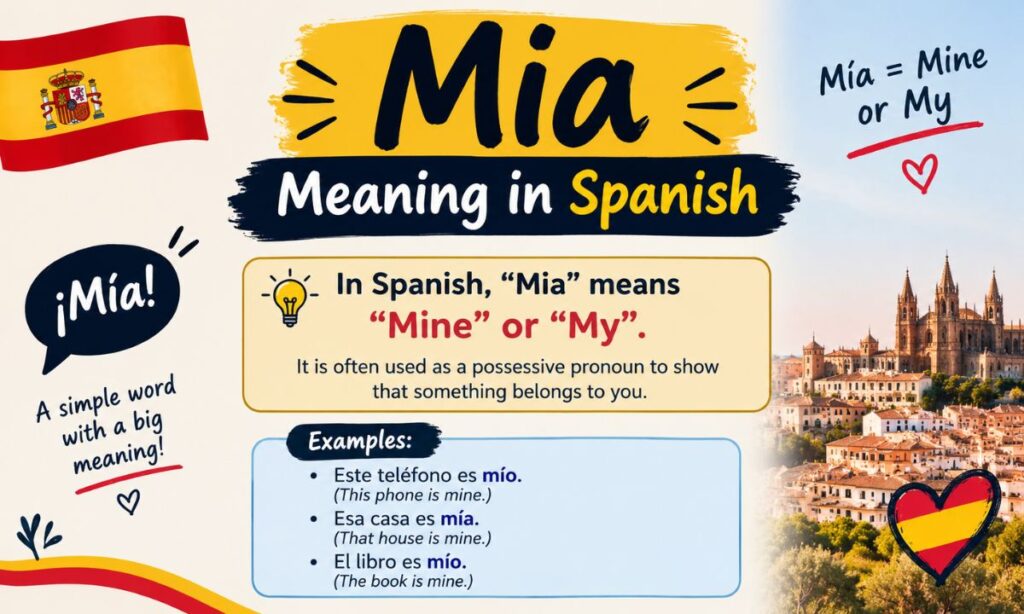
Don’t confuse the acronym with the word mía. In Spanish, “MIA Meaning” is a feminine possessive meaning “mine” (for example, “La casa es mía,” or “The house is mine”). In Italian, “mia” means “my” or “mine.” Both are unrelated to the acronym.
“Mia” is also a popular first name in many countries. Context makes it clear: all-caps “MIA Meaning” in a text about someone being absent is the acronym, and “MIA Meaning” capitalized normally is usually a person.
How People Use MIA in Texting
In chats, MIA Meaning covers a few common situations:
- Apologizing: “Sorry I was MIA Meaning, work was crazy.”
- Checking in: “Hey stranger, where have you been? You’ve been MIA Meaning!”
- Joking: “Our group project partner is officially MIA Meaning.”
- Explaining an absence: “I’ll be MIA Meaning tomorrow, big exam.”
It works well in short replies, group chats, and captions.
MIA in Social Media Culture
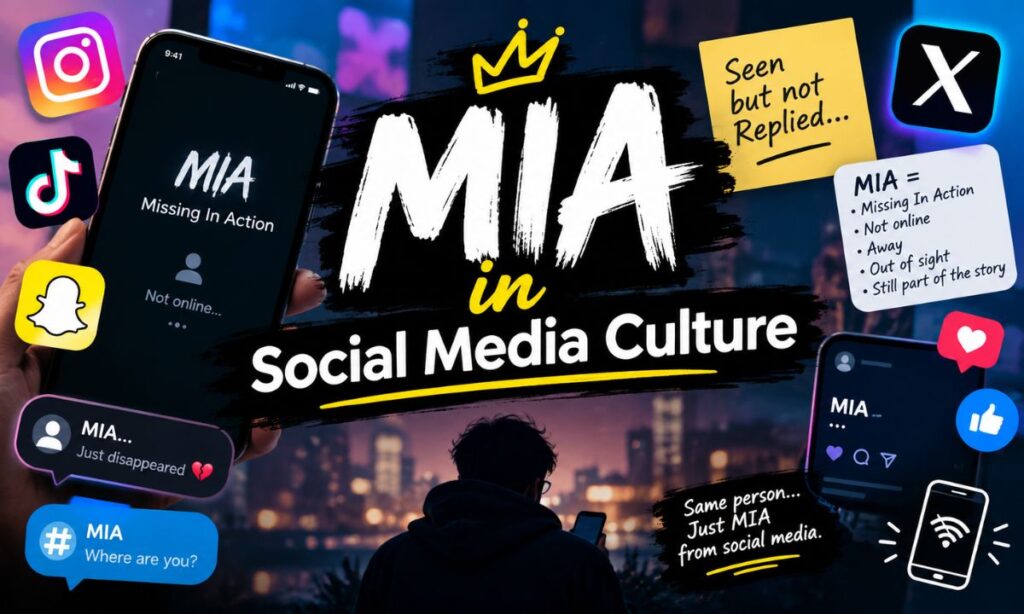
On Instagram, X (Twitter), and Facebook, people use MIA Meaning when they’ve stopped posting. A common caption looks like “Back after being MIA Meaning for a month.” Fans also say it about creators who haven’t uploaded in a while: “This YouTuber has been MIA Meaning since spring.”
MIA on TikTok
On TikTok, MIA shows up in captions and comments. Creators use it when returning from a break (“I’m back, I was MIA”), and viewers use it to ask where someone went. It often appears in jokes about being busy, tired, or “off the grid.”
MIA in Gaming
Gaming Meaning
In online games, MIA is a quick alert that an enemy has disappeared from view. It’s most familiar from team-based games like League of Legends, where players call “MIA” when an opponent leaves their lane and might be about to attack from somewhere else.
Teammates use it to warn each other:
- “Mid is MIA, watch your flank.”
- “Support went MIA, be careful.”
In this sense, MIA is a tactical warning, not a complaint.
MIA vs Ghosting
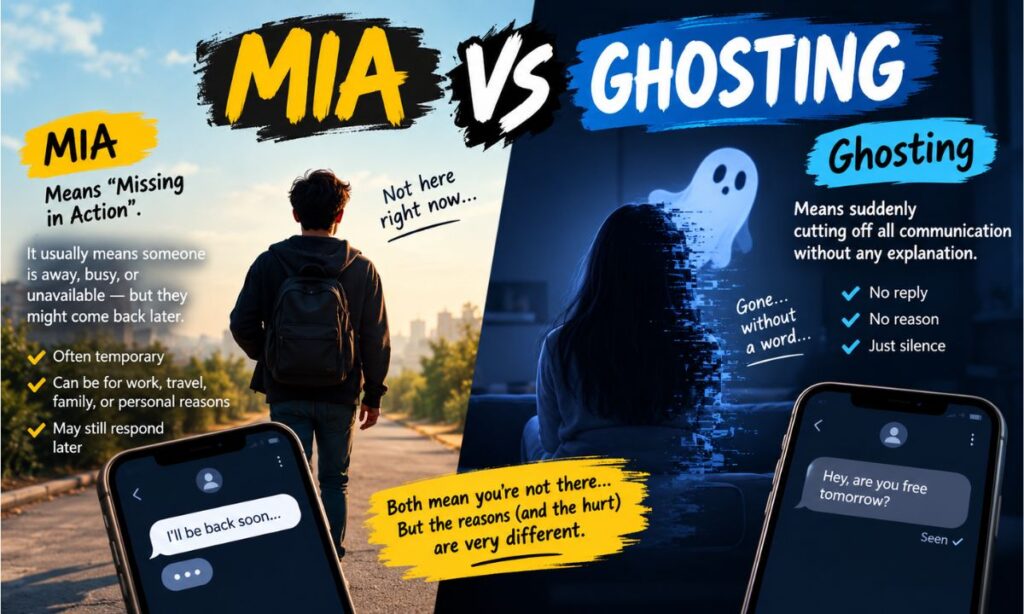
These two are easy to mix up, but they aren’t the same.
| Feature | MIA | Ghosting |
| Meaning | Temporarily absent or unreachable | Cutting off contact on purpose |
| Intent | Often unintentional or unexplained | Usually deliberate |
| Duration | Short or temporary | Often permanent |
| Typical situation | Friends, work, gaming | Dating, relationships |
| Tone | Casual, light | Hurtful, serious |
| Example | “He’s been MIA this week.” | “She ghosted me after the date.” |
A person who’s MIA may come back with an apology. A person who ghosts you often doesn’t.
Is MIA Always Negative?
No. It depends on tone and situation.
- Neutral: “I’ll be MIA this weekend (traveling).”
- Playful: “Look who’s finally back from being MIA!”
- Negative: “You were MIA when we needed you.”
Context decides how it lands.
Funny MIA Examples From the Internet
Humor around MIA usually works in a few ways:
- Self-roast: “Me, MIA from the gym since January.”
- Fake detective posts: “Missing: my motivation. Last seen Monday.”
- Group chat jokes: “Our friend who said ‘I’ll be right back’ three hours ago is officially MIA.”
- Pet jokes: “The cat is MIA until the food bag opens.”
These work because everybody has been MIA at some point.
Examples of MIA in Sentences
Here are plain examples you can copy for your own chats:
- “Sorry I’ve been MIA, I lost my phone charger.”
- “The manager has been MIA all morning.”
- “My brother goes MIA whenever there’s cleaning to do.”
- “Our star player was MIA at practice.”
- “She was MIA from social media for a while.”
MIA in Relationships
In dating and friendships, MIA often means someone has become less communicative. It might be busy schedules, stress, or low interest.
- Friendship: “He’s been MIA since he got the new job.”
- Dating: “We were talking daily, and now he’s MIA.”
If someone close to you goes MIA, a calm, direct message works best: “Hey, I haven’t heard from you lately. Everything okay?”
Can MIA Be Serious?
Yes. In official and news contexts, MIA still means a person is missing and unaccounted for, often in war or disaster. It’s also used in military records and memorials.
Because of that, avoid joking about MIA around people with military ties, or anyone who has a missing loved one. A good rule is to use the slang version with friends and the literal version in serious settings.
Why People Relate to MIA Humor
Almost everyone has ignored a message for too long or disappeared from a group chat. MIA jokes make that feel normal. They work as a gentle excuse: “I was away, I’m sorry, I’m back.”
Similar Slang Words
- AWOL: absent without leave (also military in origin)
- Ghosted: cut off contact deliberately
- Off the grid: unreachable on purpose
- Radio silent: not communicating
- Dipped: left suddenly
- Vanished: disappeared completely
MIA vs AFK
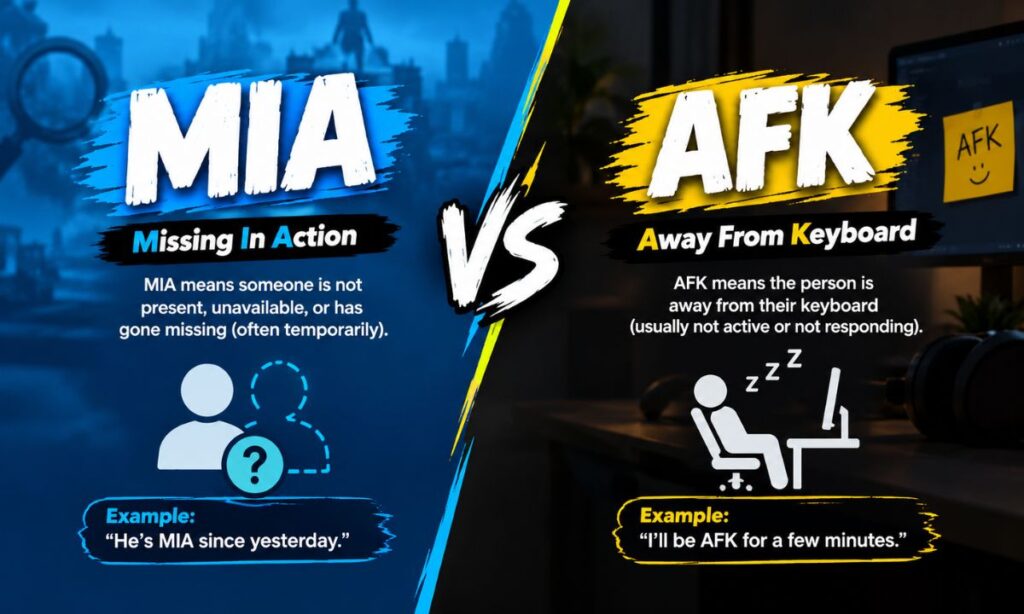
| Term | Full form | Meaning | Where used |
| MIA | Missing In Action | Absent or unreachable, often for a longer time | Texts, social media, gaming |
| AFK | Away From Keyboard | Temporarily away from the computer | Gaming, chats |
| AWOL | Absent Without Leave | Gone without permission | Work, school, military |
In short: AFK is a quick break, MIA is a bigger disappearance, and AWOL implies you weren’t supposed to leave.
Generational Use of MIA
- Gen Z: uses it in captions, memes, and group chats, often jokingly.
- Millennials: use it casually in texts and at work.
- Gen X and older: know the military meaning well and may use it more literally.
Everyone recognizes the word, but older adults are more likely to connect it to its serious roots.
Conclusion
MIA started as a solemn military term and became everyday slang for “gone quiet.” In texts, it usually means someone is absent or unreachable, and the tone is usually light. In gaming it signals a missing enemy, and in serious contexts it still means exactly what it always did.
Use it freely with friends, and think twice around military families. Now you can read “MIA” correctly wherever you see it.
FAQs
What does MIA mean in text?
It means “Missing In Action,” used to say someone is absent, unreachable, or has gone quiet.
What does “going MIA” mean?
It means disappearing from contact or a situation, usually without explanation.
Is MIA the same as ghosting?
No. MIA is often temporary and unintentional, while ghosting is deliberately cutting off contact.
What does MIA stand for originally?
It stands for “Missing In Action,” a military term for personnel whose fate is unknown.
What does MIA mean in gaming?
It’s a callout warning that an enemy has disappeared from view and may attack from elsewhere.
What does “mía” mean in Spanish?
It’s a feminine possessive meaning “mine,” unrelated to the acronym.
Is it rude to say someone is MIA?
Not usually. It’s mild, but tone matters, and it can sound accusing if used as a complaint.
What’s the difference between MIA and AFK?
AFK means briefly away from the keyboard, while MIA means absent for longer or unaccounted for.
Can I use MIA in a work email?
Yes, in casual team chats. In formal emails, write “unavailable” or “absent” instead.
Is MIA offensive to military families?
It can be if used jokingly around them, so avoid the slang use in those situations.
